Lifetime Deal Software: Pay Once, Own Forever (2026)
Is a lifetime deal actually worth it in 2026? Here's the honest math comparing lifetime deal software vs subscription SaaS — and how to tell a reliable LTD from a risky one.
Contents
One flat fee for the whole team
Tasks, timers, CRM and invoices in one workspace. From $29 a month, no seat tax.
Start free demo14 days · no credit card
How Lifetime Software Deals Actually Work
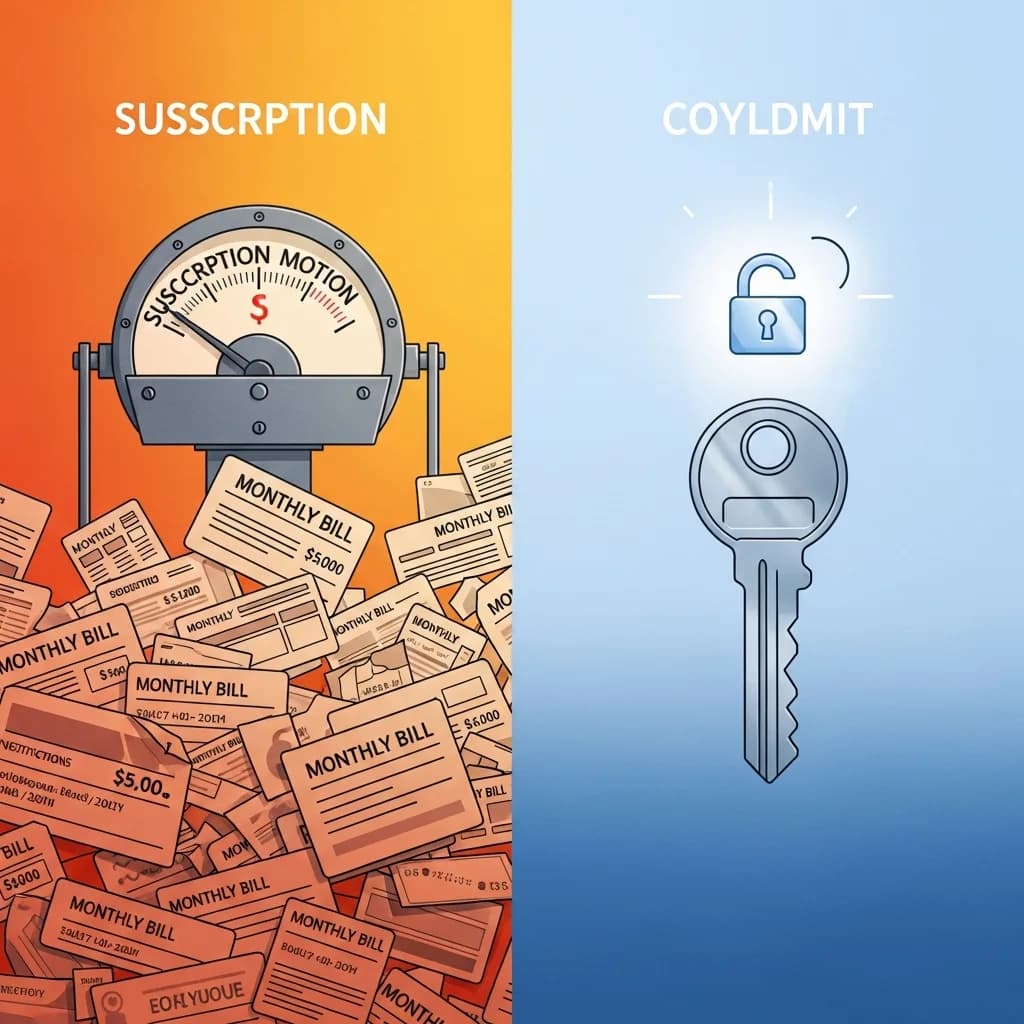
A lifetime software deal (LTD) is a one-time payment that grants permanent access to a software product — including future updates — without any recurring subscription fees. Here's the mechanics: instead of charging $X per month forever, a software company charges $Y once. The vendor ships bug fixes, feature updates, and improvements to all lifetime license holders at no additional cost. You pay once; you use it forever. Lifetime deals work differently from subscriptions in three ways: 1. Revenue model: The vendor collects upfront capital instead of monthly recurring revenue. This is common for indie makers, bootstrapped tools, and early-stage SaaS that want to fund development without VC. 2. Incentive structure: A subscription vendor is incentivized to keep you slightly dissatisfied — enough to stay, not enough to stop looking. A lifetime deal vendor is incentivized to make the product genuinely good, because satisfied customers become word-of-mouth growth (the vendor can't charge them more either way). 3. Risk distribution: You take on the risk that the product might be abandoned. The vendor takes on the risk that they must continue improving the product with no guaranteed future revenue from existing users.
- You pay once: typically $49–$499 depending on tier and team size
- Future updates included: bug fixes, new features, and improvements ship to your license
- No renewal: the license is permanent — not time-limited like an 'annual plan'
- No seat-based upsells: most LTD tools price by team tier (e.g., up to 10 users), not per-seat
"A subscription business has a structural incentive to keep you slightly dissatisfied — satisfied enough not to cancel, but not so satisfied that you stop exploring alternatives."
Why People Are Googling This in 2026
You're not searching 'lifetime deal vs subscription' out of academic curiosity. You're looking at a specific tool, seeing a one-time price, and wondering whether to trust it. Maybe you've been burned before — a lifetime deal product that went dark eighteen months after launch. Maybe you're just doing due diligence. Either reaction is reasonable. Lifetime deals have a complicated reputation: some are genuinely great value from sustainable indie makers. Others are cash grabs dressed up as generosity. The difference matters, and it's identifiable before you buy. This article gives you the math, the risk framework, and the honest answer for freelancers specifically — because the LTD calculation looks different for a solo operator than for a company with an IT budget.
Lifetime Deal vs Monthly SaaS: The Math
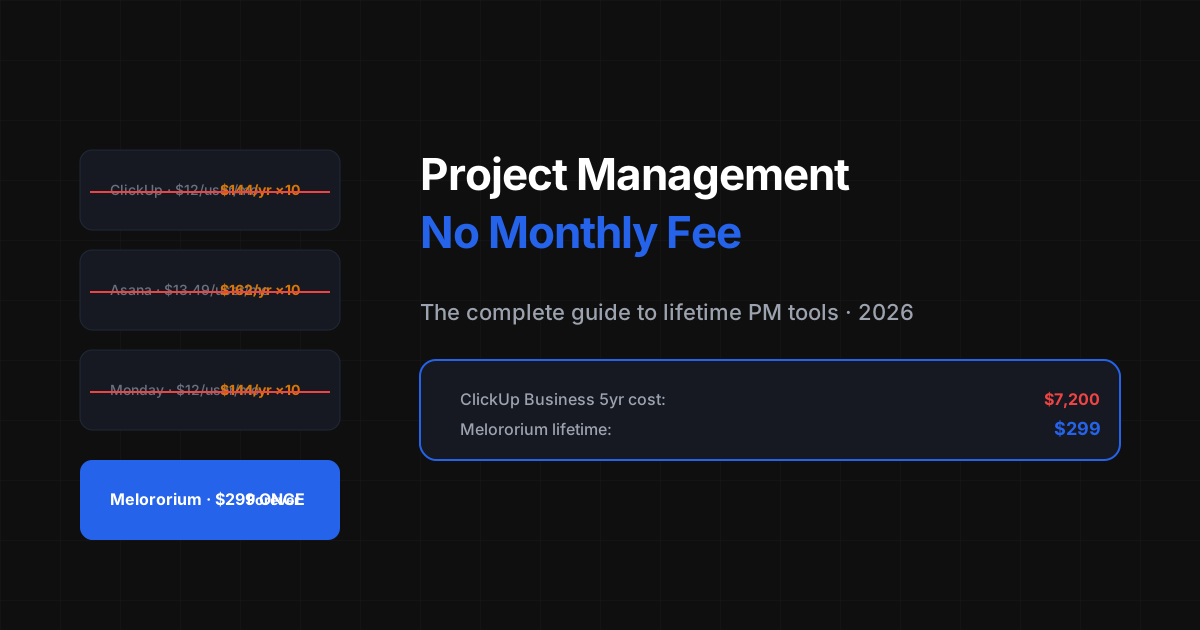
Before getting into nuance, here's the straight comparison. Prices as of June 2026 for a 10-person team:
| Lifetime Deal Software | ClickUp Business (subscription) | |
|---|---|---|
| Price | $59/mo (Agency plan) | $120/month ($1,440/year) |
| Year 1 total | $708 | $1,440 |
| Year 3 total | $2,124 | $4,320 |
| Year 5 total | $299 | $7,200 |
| Break-even | < 3 months | Never |
| Price hike risk | None — paid once | Yes — ClickUp raised prices 2023, 2024 |
| Cancel penalty | None | Lose access to all data |
The Pure Math: LTD vs Subscription Over Time
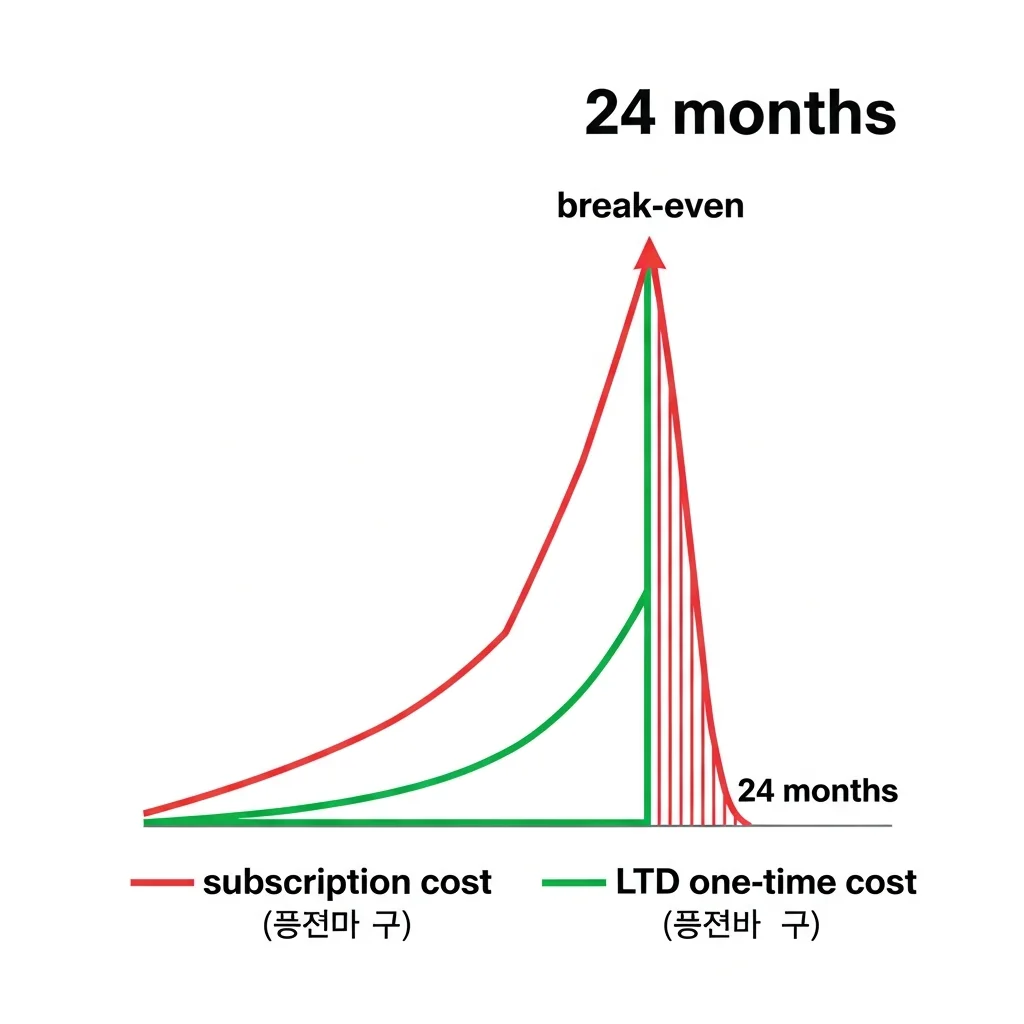
Let's use real numbers. ClickUp's paid plan runs approximately $228/year for a single user. A comparable one-time tool at $149 breaks even in under eight months. After that, every month is pure savings.
- End of Year 1: Subscription $228 · LTD $149 · LTD saving
- End of Year 2: Subscription $456 · LTD $149 · LTD saving
- End of Year 3: Subscription $684 · LTD $149 · LTD saving
- End of Year 5: Subscription $1,140 · LTD $149 · LTD saving
The Real Risks of Lifetime Deals (Honest)
The math favours LTDs. But the risk picture is real and worth understanding before dismissing it.
- Risk 1: The product gets abandoned — the main LTD horror story. A product launches, collects lifetime payments, and the founder moves on. This has happened often enough that 'AppSumo graveyard' is a real category
- Risk 2: The company pivots to subscription anyway — some LTD buyers have found their 'lifetime' access quietly grandfathered out when a company relaunches or rebrands. Rare but not unheard of
- Risk 3: The LTD tier gets feature-limited — the tool survives, but new features only go to subscription users. For tools in fast-moving categories, this is a concern
Flat fee · no seat tax
A flat-fee subscription from a builder with a track record
Melororium is built by an identifiable founder with a public record. Task management, time tracking, Slack and Gemini — from $29/mo, updates included, no renewal ever.
Starter $29/mo (4 users) · Agency $59/mo (15 users) · Studio $119/mo (25 users)
How to Tell a Reliable LTD From a Risky One
The signals that separate genuine value from a cash grab:
- Green flag: the founder is publicly identifiable with a track record
- Green flag: the tool has been running 12+ months before the LTD offer
- Green flag: there's a clear business model beyond the LTD itself (team plans, direct sales)
- Red flag: anonymous founding team or no public presence
- Red flag: launched on AppSumo with zero product history
- Red flag: extremely low price ($19 'lifetime') that suggests a short-term cash grab
What Changes When the Incentive Flips
Here's the part of the LTD debate that rarely gets discussed: what the pricing model does to the product itself. A subscription business has a structural incentive to keep you slightly dissatisfied — satisfied enough not to cancel, but not so satisfied that you stop exploring alternatives. New features exist to justify the monthly charge, not necessarily to make your work better. A one-time payment business has a different incentive: make the product genuinely excellent so you tell others about it. Referrals and word of mouth are the only growth channel when you're not running a retention machine. This tends to produce better products for daily use — not flashier ones, but more reliable ones.
What Hacker News Said About Lifetime Plans in June 2026
In June 2026, a post called 'Why Sell Lifetime Plans in a Default Subscription World?' hit the front page of Hacker News (pketh.org/lifetime-plans.html). The thread surfaced two recurring arguments worth addressing directly. Argument 1: 'Lifetime plans hurt your cash flow.' The critique is that subscription ARR is predictable; LTD revenue is lumpy and front-loaded. This is true for VC-backed companies that need to model MRR for investors. For indie makers with low infrastructure costs, the calculation is different. A successful LTD launch funds the next 12-18 months of development without taking on investors or managing churn. The cash-flow argument assumes a business structure most indie tools don't have. Argument 2: 'You can't sustain updates on lifetime plans.' This one is more interesting. The reply from several HN commenters: it depends entirely on cost structure. A SaaS that runs on complex infrastructure, a support team, and a growth team at $500k/year can't be lifetime. A lean indie tool built by one or two people with minimal infrastructure CAN sustain lifetime pricing — especially if team plans and add-ons create ongoing revenue alongside the LTD. The distinction the thread kept coming back to: lifetime plans work when the seller has genuine alignment with the buyer. When your revenue comes from referrals and word-of-mouth rather than retention loops, you build differently. That's the bet indie LTDs are making.
The Specific Case for Freelancers
The LTD calculation looks different for freelancers than for companies. A company with twenty people can absorb a failed LTD as a write-off. A freelancer who paid $149 for a tool that gets abandoned has lost money they notice. This makes the reliability signals more important, not less. But it also makes the upside more meaningful: $991 saved over five years is a significant number for a solo operator. That's a new piece of equipment, a course, a month of reduced client load. The practical answer for freelancers: buy LTDs from identifiable indie makers with track records, not from AppSumo launches with no product history. The tools that fit that description are rare — but they're the ones worth finding.
FAQ: Lifetime Deals for Freelancers
The most common questions before pulling the trigger on an LTD:
- Is a lifetime deal really lifetime? For reputable products: yes, as long as the product exists. Good LTDs explicitly state updates are included in the terms
- What happens if the company shuts down? You lose access — same as if you cancelled a subscription, except you've usually already recouped the cost in saved monthly fees
- Are LTDs a sign of desperation? Sometimes. But many successful indie tools use LTD pricing deliberately as their permanent model. The signal isn't the pricing model — it's product quality and founder track record
Boards that run themselves
Kanban with subtasks, priorities and a timer on every card
Demo request from Bloom Cosmetics
Website redesign · due Oct 14