Start free demo →
M
Melororium

MELORORIUM FOR ARCHITECTURE FIRMS

Your architecture firm tool stack costs $5,200 / year. Flat fee instead.

Monday.com, Harvest, QuickBooks, Asana, Teamwork — every architect and project coordinator is a monthly charge. Melororium replaces all five for $59/mo flat. Track project phases on Kanban boards, log billable hours inside each task card, manage client retainers in the CRM, and generate invoices from time logs. No seat tax,

Get Agency plan — $59/mo flat

10 users included. Project management, time tracking, client invoicing. No seat tax.

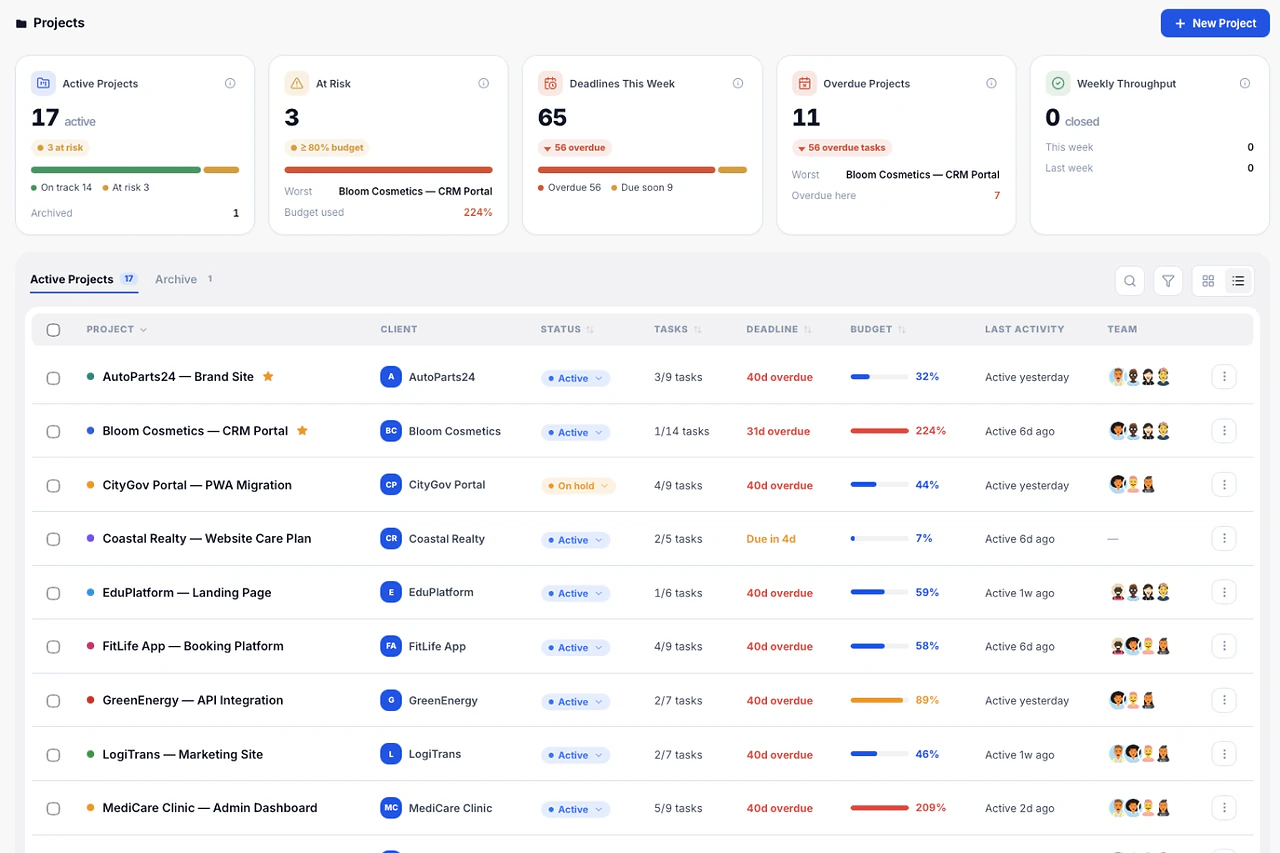
MELORORIUM FOR ARCHITECTURE FIRMS — Melororium project management workspace preview

THE FIRM SEAT TAX

Every new architect or coordinator you hire makes your software bill worse.

Architecture and engineering firms bill clients by project phase and by hour — but the project management and billing tools you rely on charge you per seat every month. Add an associate architect, add a structural consultant, add a project coordinator — and every tool extracts more monthly revenue from your fee. Melororium charges a flat $59/mo for 10 users. Cover your full project lifecycle: phase planning, site task tracking, billable hour logging, consultant cost management, and client invoice generation — in one flat-fee workspace.

The SaaS Tax

Here is what you are paying every year to run a fragmented workflow:

Monday.com Business (10 seats, project mgmt)
-$2,400 / yr
Harvest Pro (10 seats, time & billing)
-$640 / yr
QuickBooks Online (invoicing & accounting)
-$420 / yr
Asana Business (10 seats, phase tracking)
-$1,200 / yr
Teamwork Grow (10 seats, client projects)
-$540 / yr
Total Annual SaaS Cost$5200 / yr
Melororium Flat-Fee Plan$59/mo
Flat-fee subscription. Save $4492 every year vs your current stack. No seat tax.
Interactive Projection

Cumulative SaaS Tax vs. Flat-Fee Subscription

-$15600
SaaS Tax
$2124
Melororium
CUMULATIVE SAVINGS+$13476

That's $26,000 saved over 5 years — enough to fund a full office technology refresh or a year of professional development for your team.

PROJECT PHASE WORKFLOW

From client brief to final invoice, in one workspace.

Stop tracking project phases in Monday, logging site hours in Harvest, and billing in QuickBooks. Melororium keeps your project Kanban, architect timers, client CRM, and fee invoice on one screen. Your team spends more time on design and construction coordination and less time managing three separate billing systems.

Workspace Sync Pipeline4 steps
1

Client Project and Fee Structure Setup

Create a client record in the CRM with contracted fee amount, billing method (fixed fee or hourly), project timeline milestones, and responsible architect assignment. Link directly to the project Kanban. View total fee, logged hours, and remaining budget at a glance without switching tools or running reports manually.

2

Project Phase Kanban Tracking

Build a Kanban board per project with phases matching your delivery stages: Schematic Design, Design Development, Construction Documents, Permit Review, Construction Administration, Closeout. Assign tasks to architects and consultants, set phase completion deadlines, and move milestones forward with sub-100ms response.

3

Billable Hour and Site Visit Logging

Every task card has a built-in stopwatch. Architects log design hours, site visit time, client meeting durations, and coordination hours directly inside each task. Hours accumulate against the project and client automatically at configured billing rates — no separate time tracker, no end-of-month timesheet assembly, no billing disputes.

4

Phase Invoice Generation

When a project phase milestone is reached or a billing period closes, open Work Reports and select the project. Melororium aggregates all logged hours against architect rates, calculates consultant cost, and generates a professional fee invoice in one click. Payment tracking updates on your project calendar alongside upcoming permit deadlines.

Workspace Sync Pipeline
Step 1 of 4
Dashboard · Vital SignsLive
Active Projects24
Team Members12
Open Tasks87
Monthly Revenue$58K
Workflow synchronized natively

VALUE COMPARISON

Why pay per seat when you can go flat-fee?

Compare face-to-face. Other SaaS platforms lock your workflows and data behind endless per-seat fees. We believe professional software should be a flat fee for your whole team.

The old way

Paying monthly subscription taxes for every minor tool you use.

Scattered operational records causing workflow gaps and missed hours.

Heavy, sluggish cloud interfaces wasting your daily billable capacity.

Compiling raw timesheets manually to calculate project margins.

The Melororium way

Flat monthly fee for your whole team. Secure, scalable workspace.

Unified time logging and accounting tied directly to active tasks.

Blazing-fast local-first execution with zero interface latency.

Integrated ledger automation generating live performance reports.

ZERO LOADING SPINNERS

Local-first compilation. Zero server delays.

Melororium compiles all database transactions straight inside your client engine before pushing silent sync tasks to the server.

Local Cache Write< 2ms

IndexedDB direct write — zero network dependency

UI Re-render< 16ms

React virtual DOM diff — 1 animation frame

Background Sync< 100ms

Async worker sync — invisible to the user

Typical SaaS API600–1400ms

Server roundtrip + JSON parse + re-hydrate

LIVE TEST

Run a latency benchmark

Simulate a real workspace action and measure local vs remote execution time.

⚡ Melororium (Local-first)
🐢 Traditional SaaS (Server API)

Click run to measure local performance.

EARLY FEEDBACK

See what teams say about Melororium.

Early adopters from agencies and studios share how ditching the subscription stack changed how their teams operate.

Built for modern digital operations.

Join the early adopters scaling their business layout with Melororium.

$0
Per-Seat Tax
100%
Data Privacy
< 100ms
Board Latency
2026
Launch Edition

PRODUCT FAQ

FrequentlyAsked Questions

Have a question that needs a human to answer?

No problem, email us at support@melororium.com

Starter ($29/mo) covers up to 4 users — ideal for small teams. Agency ($59/mo, most popular) covers up to 10 users and lets you pick 5 additional modules on top of the 12 core ones. Studio ($119/mo) covers up to 25 users and unlocks all 20+ announced modules. All plans are billed monthly or yearly (save ~30% annually).

Switch plans anytime — your data stays intact and the transition takes seconds. Upgrade is prorated automatically. No lock-in, no penalties for growing your team.

With per-seat tools, every new hire costs more. A 10-person team on ClickUp pays $1,440/yr in seat fees alone. Melororium charges one flat monthly fee for your whole team — add 1 person or 10, the price stays the same. No seat tax that eats into your margins as you grow.

Security is non-negotiable. Melororium operates on end-to-end data encryption (TLS 1.3) with enterprise-grade database separation. Our AI features use strict Bring Your Own Key (BYOK) architecture — your data is never used for model training.

Yes. Melororium supports dedicated Client Portals at no extra cost. Clients can view project timelines and download deliverables. Guest client access does not count against your team seat limit.

Every plan includes: Dashboard, Kanban, Projects, Calendar, Team management, Client CRM, Invoices, Work Reports, Live Timers, Inbox, Time Tracker, and Settings. Agency and Studio plans add extra modules on top of these.

Project Management for Architecture Firms: Tracking Phases, Hours, and Billing Without Per-Seat Fees

Architecture and engineering firms operate on long-duration projects with distinct phases, complex client relationships, and precise billing requirements. A single building project might run 18–36 months from schematic design through construction administration, with different team members active in each phase and billing structured around milestones or hourly rates. Managing this complexity requires operational tools that understand the rhythm of professional services — not generic task managers designed for software teams. This guide explains how a flat-fee workspace built for service firm billing changes how architecture firms manage projects.

The Architecture Project Lifecycle and Its Management Challenges

Architecture projects move through standardised phases: Programming, Schematic Design, Design Development, Construction Documents, Bidding/Negotiation, and Construction Administration. Each phase has distinct deliverables, different team compositions, and separate billing milestones. Managing all of this for multiple concurrent projects — a typical architecture firm of 10–20 people might have 15–25 active projects at any time — requires systematic project management infrastructure. The challenge is that most project management tools are built for short-cycle task work, not for phases that run three to six months with deliverables measured in drawing sets and specification documents. Architecture firms end up using project management tools for task tracking and spreadsheets for phase billing — a fragmentation that costs administrative hours every month.

Hourly Billing in Architecture: Where Time Gets Lost

Architecture fees are often a combination of fixed phase fees and hourly billing for additional services — site visits, permit applications, consultant coordination, owner-requested design changes. The hourly work is where billing most often breaks down: team members forget to log time, time gets attributed to the wrong project, and the PM reconstructs hours from email threads and calendar entries at month end. Systematic time tracking inside project tasks eliminates this problem.

Structuring Architecture Projects in Melororium

Architecture firms using Melororium create a project per building project, with Kanban phases matching the project lifecycle. Within each phase, tasks represent specific deliverables: floor plan drawings, structural coordination, mechanical drawings, specification sections. Tasks are assigned to the team members responsible for each deliverable, with due dates tied to submission milestones. Project architects and associate architects log time inside tasks as they work. Principal architects see the live view of all active projects — what phase each is in, how many hours have been logged this month, which deliverables are overdue. At billing milestones, the work report shows all hours by project phase, by team member, and by date — providing the backup for monthly invoices.

Phase Billing and Milestone Invoicing

Architecture billing typically ties invoices to phase completion: a percentage of the total fee is invoiced at the completion of Schematic Design, another percentage at the completion of Design Development, and so on. Melororium supports milestone billing by allowing invoices to be created at each phase completion, with the work report for that phase attached as billing backup.

Consultant Coordination and Third-Party Billing

Architecture projects involve multiple consultants: structural engineers, mechanical and electrical engineers, civil engineers, landscape architects. Their fees are often passed through to the client with a coordination markup. Melororium's project records can include consultant costs alongside team time logs, giving the PM a complete cost picture for each project phase.

Melororium vs. Deltek for Architecture Firm Project Management

Deltek Vision and Ajera are the dominant project management and accounting tools in architecture firms, but they are enterprise platforms with complex implementation, significant licensing costs ($100–$300/user/month in enterprise tiers), and IT maintenance requirements. For firms of 10–25 people, the operational benefits of Deltek rarely justify the cost and complexity. Melororium provides the core project management, time tracking, client management, and invoicing functions that small to mid-size architecture firms need at $708–$1,428/year (Agency or Studio plan), without enterprise complexity or per-user pricing that scales against you as the firm grows.

Managing a Multi-Project Architecture Practice

A principal at a 12-person architecture firm typically oversees 15–20 concurrent projects at various phases. Keeping track of which projects are hitting deadlines, which team members are at capacity, and which projects have outstanding invoices requires a management view that spans the entire office. Melororium's dashboard and global Kanban provide this view. The dashboard shows project health across the practice, hours logged this month by team, and outstanding invoice status. The global Kanban shows every active task across every project — a 10-minute morning review tells the principal where to focus attention that day, without requiring status meetings or individual check-ins.

Own your firm's project infrastructure. Flat fee.

$59/mo flat for 10 users. Phase Kanban, task-embedded timers, client CRM, fee invoice generation, and financial reports — all in one workspace. No seat renewals, no seat tax, no add-on fees. Start a 14-day free demo, no card needed.

Get Agency plan — $59/mo flat 14-day free demo. No credit card required.
Stripe VerifiedTLS 1.3 EncryptionSlack Natively IntegratedBYOK ArchitectureNo Per-Seat Fees.
app.melororium.com
M
MelororiumWorkspace
Dashboard
Projects
Tasks
Clients
Employees
Work Reports
Timers
Calendar
Integrations

Main Dashboard

Active Projects
42+3
Team Members
18
Worker Payouts
$42,300
Monthly Revenue
$145,000+12%
Revenues and expenses
All Retainers Combined
Revenue YTD$ 1,240,500
Expenses YTD$ 420,100
Projects Health
Carper SaaS Redesign68%
34/50 completed
Brand Campaign Q392%
110/120 completed
Client Portal Sync15%
3/20 completed
Mobile App V245%
18/40 completed