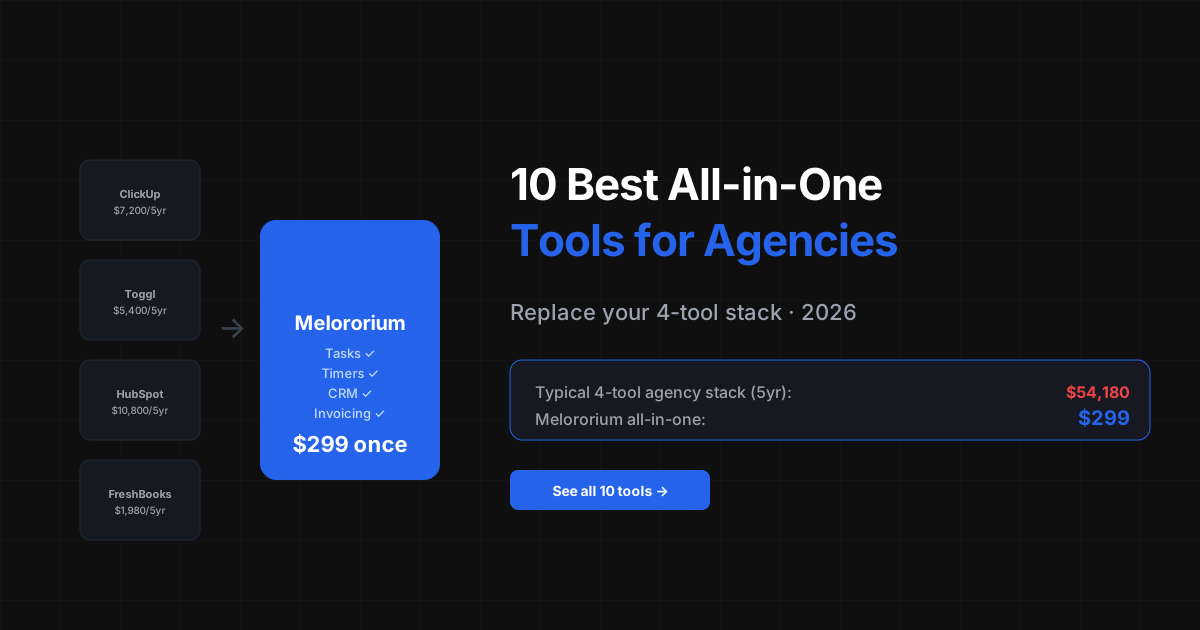
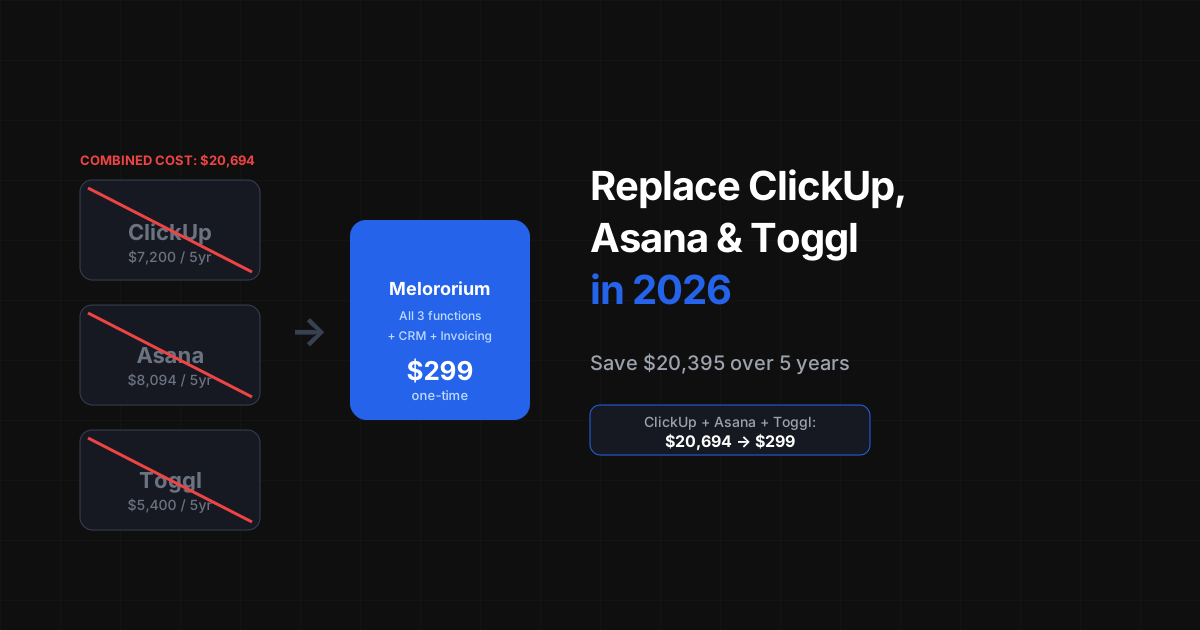
We Replaced 4 Tools With One. Here's What Happened to Our Margins After 3 Months
A real build-in-public case study: our agency was paying $800-1,200/month across ClickUp, Notion, Toggl, and Excel. Here's the honest before-and-after — including what didn't improve.

The Stack We Were Running (And What It Actually Cost)
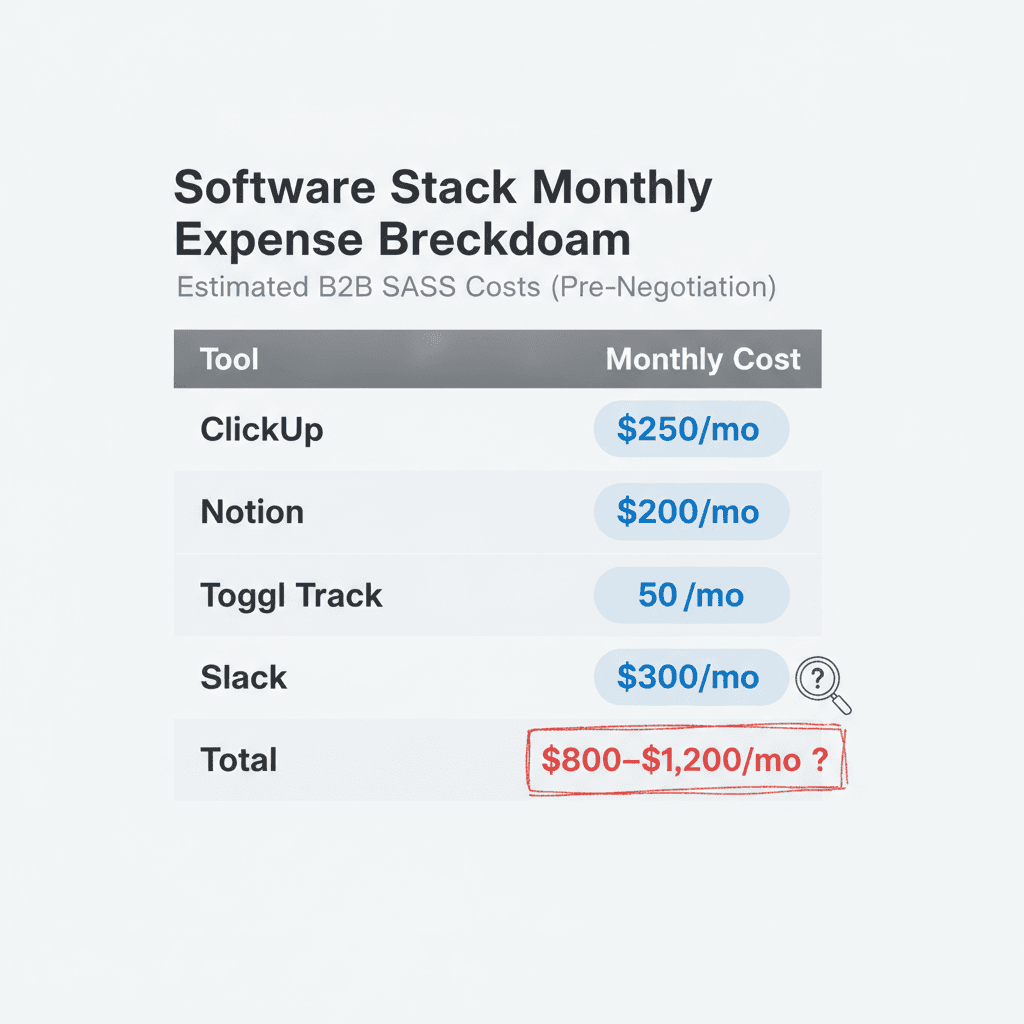
Before I get into what changed, here's exactly what we were running. No rounding up for effect — this is the real stack, the real monthly bill.
- ClickUp Business, 10 seats, for task management
- Notion Business, 10 seats, for client docs and internal wikis
- Toggl Track Premium, 10 seats, for time tracking
- Slack Pro, for team and client communication
- Excel/Google Sheets, for the budget and margin tracking none of the above tools actually did
"This isn't a tidy success story. It's the honest version — what got better, what stayed the same, and the one thing that genuinely surprised us."
Why We Finally Decided to Consolidate
It wasn't one dramatic moment. It was an accumulation of small frictions that eventually outweighed the inertia of not changing anything. Status updates for clients required pulling data from ClickUp for task progress and Toggl for hours, then manually building something presentable in Notion or a doc. Every Friday, someone on the team — usually me — spent an hour or more just assembling information that should have already lived in one place. The budget tracking was the worst part. None of the three core tools told us project margins. We knew tasks were getting done. We knew hours were being logged, approximately. We did not have a reliable, current answer to the question 'is this project actually profitable?' That answer lived in an Excel sheet that someone updated when they remembered to, which meant it was usually two to three weeks stale by the time anyone looked at it.
"We were drowning in our own tool stack. Every single day was a chaotic loop: jumping between ClickUp for tasks, Toggl for hours, and Excel for budgets. We were duplicating data, missing project margins, and burning cash on different monthly subscriptions."
— Kyrylo Niesmielov, on building Melororium
The Switch: What Moved, What Stayed, What We Almost Didn't Migrate
We didn't do a clean, simultaneous cutover. That's not how migrations work in a business that still has active client deadlines. Here's the actual sequence.
- Week 1: New projects only — we started every new client project in the new system while leaving existing projects running in the old stack. Running both systems in parallel meant no live client deliverable was ever at risk
- Weeks 2–4: Migrating active projects — one project at a time, we moved task lists, attached files, and historical context into the new workspace. Projects closest to completion we deliberately left in the old tools
- What we almost didn't migrate — historical time-tracking data from Toggl. We exported it for reference but didn't import it directly. We kept Toggl accessible read-only for about two months, then let the subscription lapse entirely
Task tracking, native timers, client CRM, and work reports in one workspace — used to run our own agency
See pricingMonth 1: The Painful Part Nobody Tells You About
I want to be direct about this because most tool-switch stories skip it: month one was genuinely harder, not easier, than the old way of working. Running two systems in parallel for new versus existing projects meant some team members had to remember which tool a given client lived in. We had at least two instances where someone updated a task in the old system out of habit, and the new system showed stale status until we caught it. There was also a learning curve cost that's easy to underestimate. Even with an intuitive interface, ten people building new habits around where information lives takes real time — probably eight to twelve cumulative hours across the team in the first two weeks, just in the friction of 'wait, where do I put this now?'
Month 2: Where Things Started to Click
By the second month, the parallel-system problem had mostly resolved itself — simply because more projects had migrated and fewer people needed to remember which system applied to what. The first genuinely good moment came during a Friday status review. Instead of the usual hour of pulling data from three places, the project lead pulled up the dashboard and had the update ready in about fifteen minutes. Tasks, hours, and a rough margin estimate were already sitting in one view. This is also when we started using the timers properly — not as an afterthought switched on separately, but built into the same place tasks already lived. The friction of 'remember to start Toggl' simply went away because there was no separate app to remember.
Month 3: The Honest Numbers
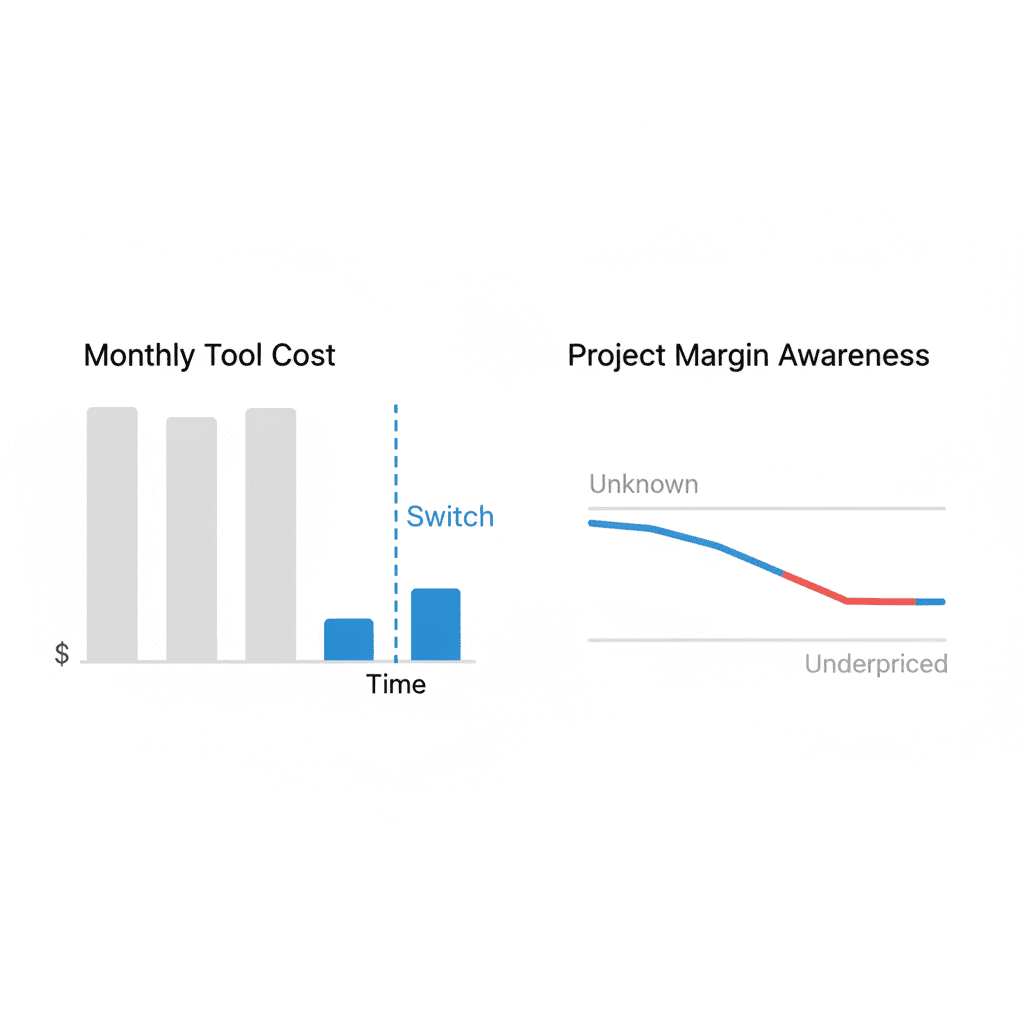
Here's where I have to resist the temptation to round this story up into a clean win. The honest answer is: the effect on margins was mixed. On the cost side, the math is straightforward and genuinely good. We went from $800–1,200/month across four tools to a flat-fee workspace. Even taking the conservative end of that range, we were ahead within the first month purely on subscription cost avoided. On the operational side, the picture is more nuanced. Some of the time we expected to recover from reduced status-update overhead did materialize — that Friday review genuinely got faster. But some of it got reabsorbed elsewhere, mostly into the migration and habit-forming work in month one, and into a few projects where we discovered, via the new margin visibility, that we'd been underpricing work we thought was profitable. That last point deserves its own mention: the margin visibility wasn't entirely good news in the short term. We found one ongoing retainer that, once hours and actual project costs were visible in one place, was running close to break-even rather than the healthy margin we'd assumed. That's not a Melororium problem — that's a 'we should have known this three months earlier' problem, and the tool simply made it visible faster than our old spreadsheet-when-remembered system did.
What Actually Improved — And What Didn't
Genuinely improved:
- Monthly software cost — clear, immediate, no ambiguity
- Time to assemble a client status update — down from roughly an hour to fifteen minutes
- Margin visibility — we now know within days, not weeks, if a project is underperforming
- Fewer 'which tool is that in again?' moments — once the migration settled
Would We Do It Again?
Yes — but I'd set expectations differently the second time around. I'd tell past-me that month one would be harder, not easier, and that the financial win would show up faster than the operational win. Both of those things turned out to be true, and knowing that in advance would have made the rough first few weeks feel less like a mistake and more like a known cost of the transition. The margin visibility point is the one I'd emphasize most to anyone considering a similar move. The cost savings are the easy sell. The harder, more valuable thing is simply seeing your business clearly — including the parts you'd rather not see yet. We found one underpriced retainer in month three. I'd rather know that in month three than in month eighteen.
Built to fix tool chaos.
We built Melororium to fix our own tool chaos. Flat-fee, whole team included.