Asana vs Monday vs ClickUp: Which One Is Actually Worth Paying For in 2026?
The three biggest project management tools — compared honestly on price, features, and what small teams actually get. Plus the flat-fee option none of them mention.
Contents
One flat fee for the whole team
Tasks, timers, CRM and invoices in one workspace. From $29 a month, no seat tax.
Start free demo14 days · no credit card
Asana vs Monday vs ClickUp: Quick Verdict for 2026
If you need the answer fast:
- Asana — best for task and project management with no time tracking. Cleanest interface, best dependency management. Requires a separate time tracking tool ($1,080-1,440/yr extra for a 10-person team).
- Monday.com — best for flexible visual data structures and automation. Time tracking only on Pro tier ($2,280/yr for 10 users). Three-seat minimum penalizes small teams.
- ClickUp — most features, steepest learning curve. Native time tracking from Unlimited tier ($840/yr for 10 users). No invoicing or client CRM at any tier.
- None of the three include client CRM or invoicing — agencies that need all three in one tool have to look beyond this list.
"This comparison is for the agency owner who has researched all three tools, is still confused, and wants a straight answer — including the one none of these tools have an incentive to give you."
Why This Comparison Exists
Asana, Monday, and ClickUp each run large-scale marketing campaigns positioning themselves as the obvious choice for teams. Most people searching for project management software encounter all three simultaneously and spend weeks trying to decide between them. This comparison is for the agency owner who has done that research, is still confused, and wants a straight answer — including the one none of these three tools have an incentive to give you: sometimes none of them is the right choice.
The Price Table That Changes Everything
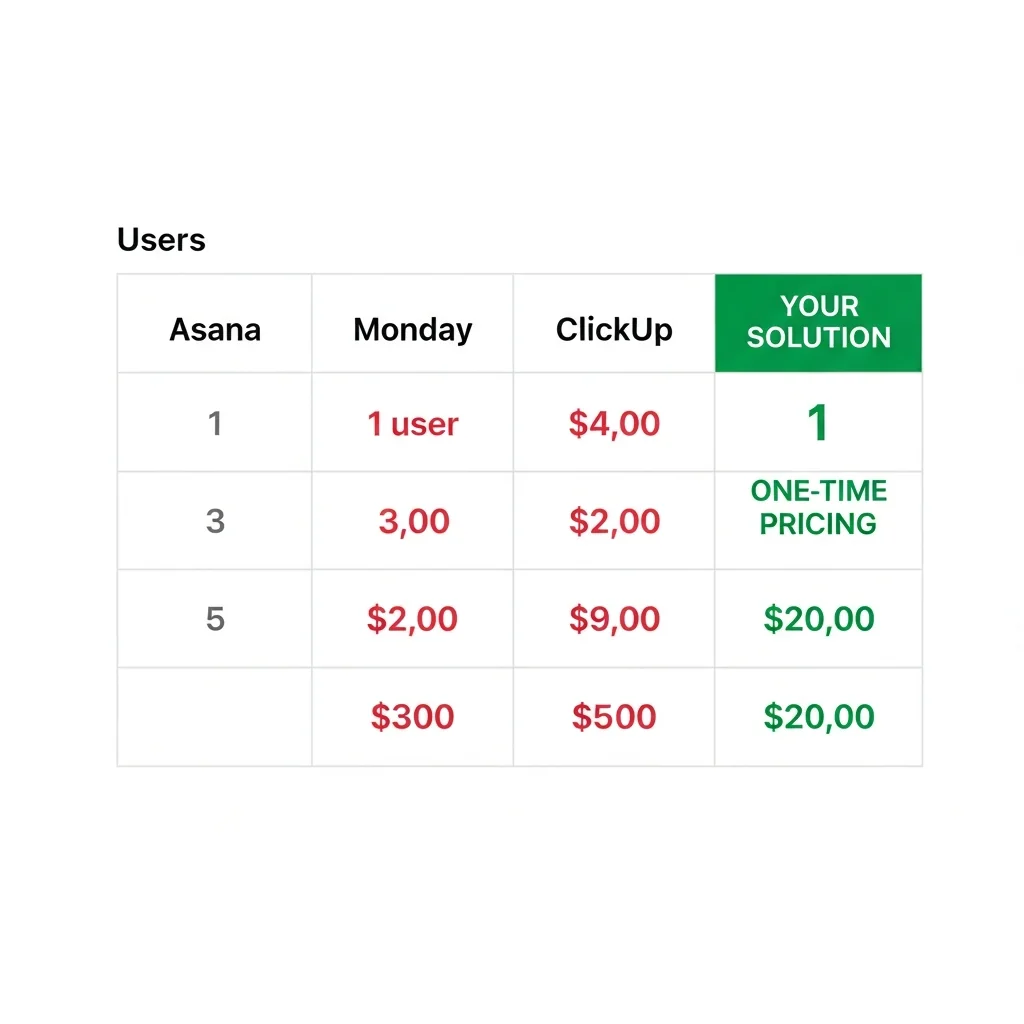
Before features: the annual cost for a 10-person team on the main paid tier of each tool in 2026:
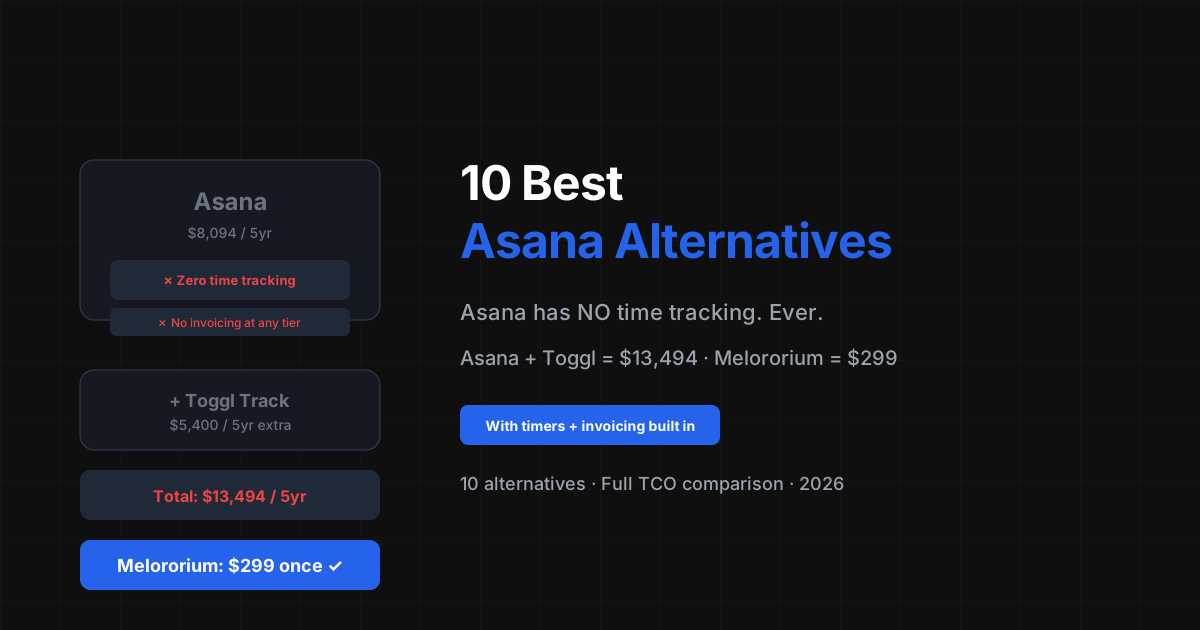
- Asana Starter: $10.99/user/month × 10 users = $1,318/year — no native time tracking on any tier
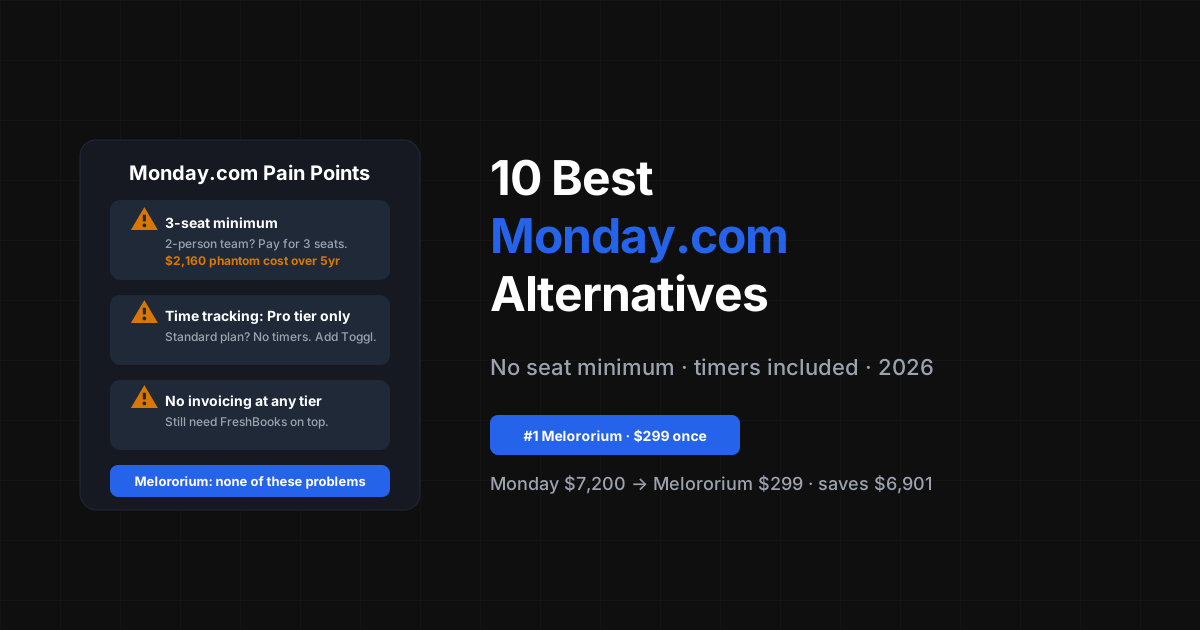
- Monday.com Standard: $12/user/month × 10 users = $1,440/year — time tracking only on Pro ($19/user/month = $2,280/year for 10 users)
- ClickUp Business: $12/user/month × 10 users = $1,440/year — no invoicing, no client CRM at any tier
Asana: The Clean Interface With a Steep Upgrade Wall
Asana is the cleanest project management interface in this comparison — and the one with the most notable feature gap for agency teams. Key facts for 2026:
- Does well: lowest learning curve of the three — teams are productive within days, not weeks
- Does well: best task dependency and timeline management in the category
- Does well: strong notification and inbox system for cross-team visibility
- Does well: 200+ integrations including Slack, Google Workspace, and Salesforce
- Frustrates: no native time tracking on any tier — Asana explicitly removed it; requires Harvest ($12.80/user/month) or Toggl ($9/user/month) on top
- Frustrates: reporting locked behind Advanced tier ($24.99/user/month = $2,998/year for 10 users)
- Frustrates: Asana AI features require Business tier ($30.49/user/month billed annually)
- Frustrates: per-seat billing means a 10-person team adding 2 contractors temporarily pays $263 more per year
Monday.com: The Visual Tool That Charges for Visual Features
Monday.com is the most visually polished of the three — and the one with the steepest effective price once you add the features agencies actually need. Key facts for 2026:
- Does well: most visually appealing interface — genuinely beautiful board and dashboard design
- Does well: highly flexible data structure — boards function as spreadsheet-database hybrids
- Does well: strongest automation builder of the three — non-technical teams can configure complex workflows without developers
- Does well: best Gantt and workload views at the Standard tier
- Frustrates: time tracking locked behind Pro tier ($19/user/month = $2,280/year for 10 users) — Standard has no time tracking
- Frustrates: three-seat minimum on all paid plans — pairs and micro-teams overpay by design
- Frustrates: complexity scales with features — high-value boards require significant configuration investment before they're useful
- Frustrates: guest access limited; external stakeholder collaboration requires paid seats
Flat fee · no seat tax
Before committing to $300-$430/year
Check whether you actually need enterprise-scale project management — or whether a flat-fee tool built for your team size makes more sense.
flat fee, no seat tax
Starter $29/mo · Agency $59/mo · Studio $119/mo
ClickUp: The Everything Platform With Everything Complexity
ClickUp has the most features of any tool in this comparison — which is both its main selling point and its primary frustration. Key facts for 2026:
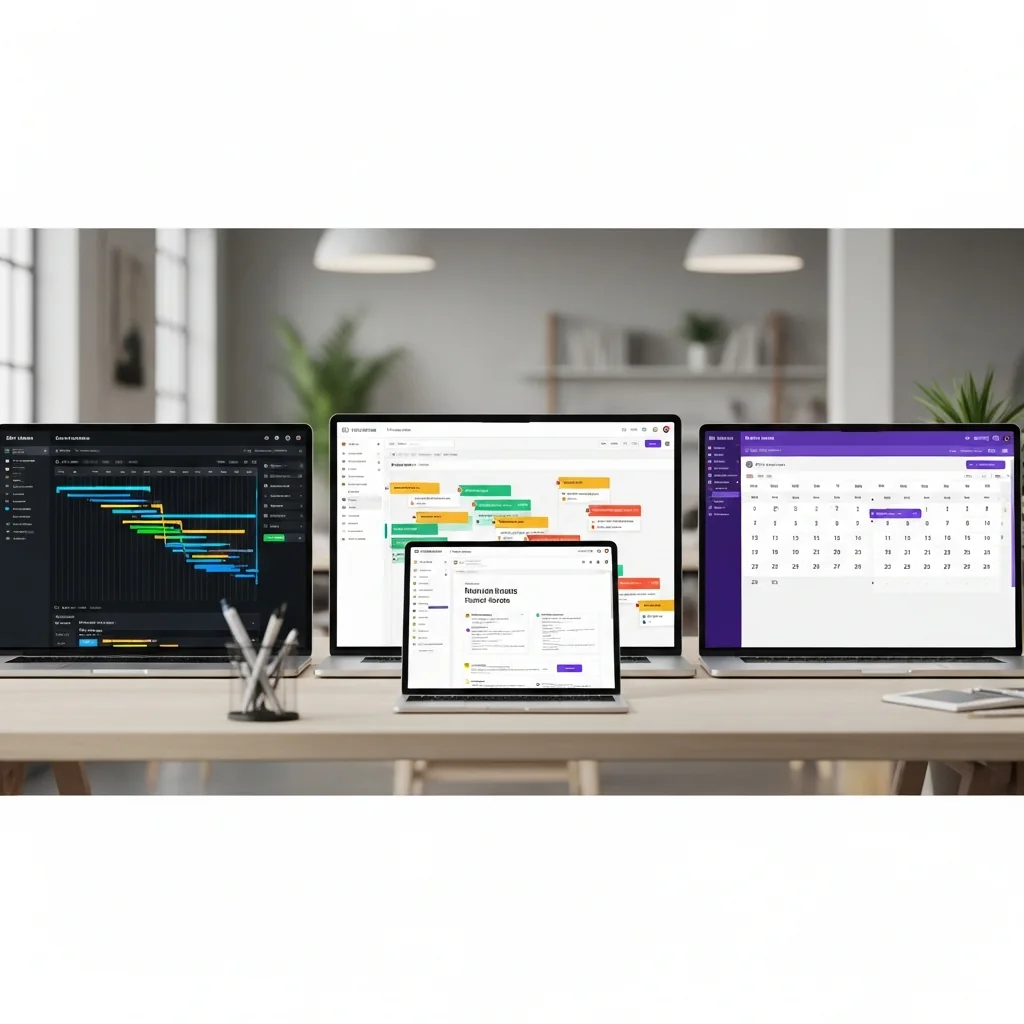
- Does well: most comprehensive feature set — Kanban, list, Gantt, calendar, mind map, whiteboards in one tool
- Does well: generous free tier with more functionality than Asana or Monday.com free plans
- Does well: most configurable of the three — teams with complex, non-standard workflows can model almost anything
- Does well: native time tracking from Unlimited tier ($7/user/month = $840/year for 10 users)
- Frustrates: feature overload — most teams actively use 15-20% of available features
- Frustrates: slowest load times of the three — a consistent complaint across team sizes
- Frustrates: dashboard customization requires Business tier ($12/user/month = $1,440/year for 10 users)
- Frustrates: no native invoicing and no client CRM at any tier — agencies still need FreshBooks or QuickBooks on top
Feature-by-Feature: What Each Tool Actually Does Well
The features that matter most for agencies and small studios — including total annual cost for a 10-person team:
| Feature | Asana | Monday | ClickUp | Melororium |
|---|---|---|---|---|
| Annual cost (10 users) | $1,318/yr | $1,440/yr | $1,440/yr | $59/mo flat |
| Native time tracking | No — requires Toggl/Harvest | Pro only ($2,280/yr for 10 users) | From Unlimited tier | Yes — built in |
| Client CRM | No | No | No | Yes — built in |
| Financial reporting | No | No | No | Yes — built in |
| Kanban boards | Yes — cleanest UX | Yes — most visual | Yes — most flexible | Yes |
| Per-seat pricing | Yes — $132/user/yr ($10.99/mo) | Yes — $12/user/mo (Standard) | Yes — $12/user/mo | No — flat-fee subscription |
| Price hike risk | Yes (raised 2023, 2024) | Yes (raised 2023, 2024) | Yes (raised 2023, 2024) | Fixed — flat monthly fee, no per-seat scaling |
For Small Teams: Who Should Use What
The honest decision guide for agency teams of 4–30 people:
- Use Asana if: you're a 5-20 person team focused on task dependencies and project timelines, you don't invoice based on tracked hours, and team adoption speed matters more than feature depth
- Use Monday.com if: you're a 5+ person team that needs a flexible data structure and has operations staff to configure and maintain boards — budget for the Pro tier ($2,280/year for 10 users) if time tracking is required
- Use ClickUp if: you need maximum workflow flexibility, have someone technical to configure it, and track time but don't need native invoicing — the Unlimited tier ($840/year for 10 users) is where time tracking becomes available
- Use a flat-fee alternative if: your team is 4–30 people doing client work that requires task management, time tracking, and invoicing in one place — per-seat pricing compounds as the team grows and most of the per-seat cost goes toward features you don't use
The Flat-Fee Option They Never Mention
Every comparison article on this topic ends with a recommendation of one of the three tools above. None of them mention the fourth option: a flat-fee subscription that doesn't grow with your headcount. For agencies and studios of 4–30 people doing client work — the exact audience that finds Asana missing time tracking, Monday.com pricing time tracking behind a $2,280/year wall, and ClickUp overbuilt for their actual workflow — a flat monthly fee covers the same core needs without the per-seat math. The comparison: - Asana Starter (10 users): $1,318/year + Toggl $1,080/year = $2,398/year for tasks and time - Monday.com Pro (10 users): $2,280/year for tasks and time — no invoicing - ClickUp Business (10 users): $1,440/year for tasks and time — no invoicing, no CRM - Melororium Agency (15 users): $708/year — tasks, Kanban, native time tracking, client CRM, and invoice generation The 5-year difference: $7,200 for ClickUp Business vs $3,540 for a flat-fee alternative doing more for the same team. That gap widens if you need to add Harvest, FreshBooks, or HubSpot on top. Melororium is built for this segment: Kanban task management, live team timers inside tasks, client CRM, and PDF invoice generation — one flat fee, no seat tax, no pricing surprises as the team grows.
Melororium
Try it in Melororium
Melororium — flat-fee team workspace for agencies and studios. Tasks, timers, and integrations — one price for your whole team.
Boards that run themselves
Kanban with subtasks, priorities and a timer on every card
Demo request from Bloom Cosmetics
Website redesign · due Oct 14