ClickUp Pricing 2026: True Cost for a 10-Person Team
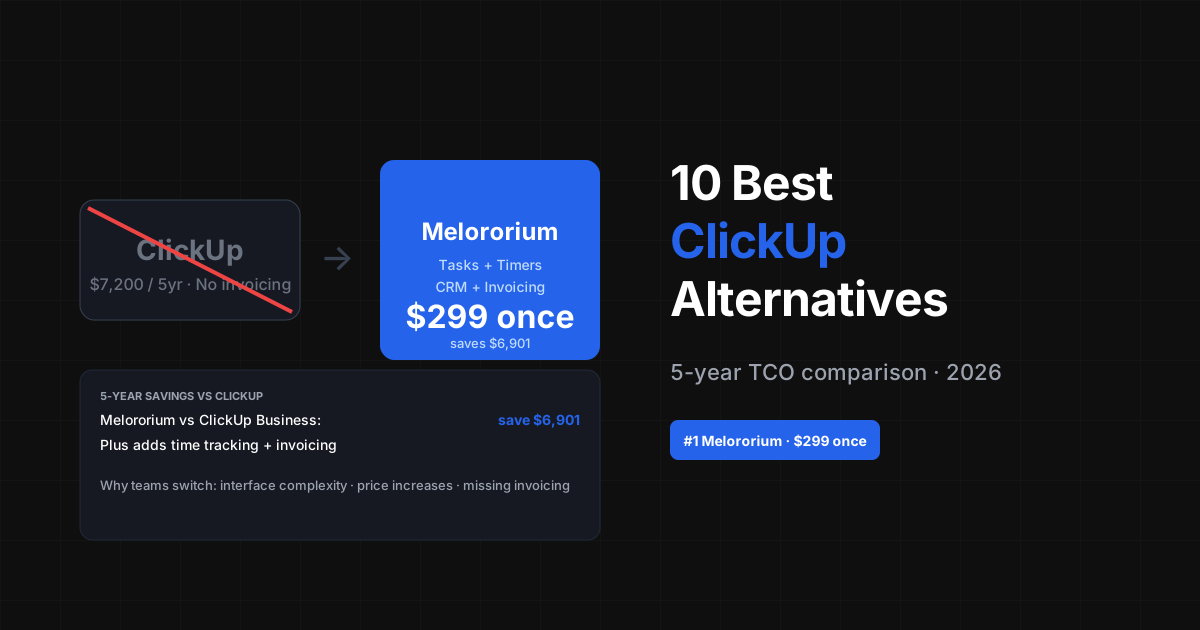
ClickUp Business: $1,440/yr for 10 users. Here's the full 2026 breakdown — tier limits, hidden fees, and the flat-fee alternative agencies are switching to.

Contents
One flat fee for the whole team
Tasks, timers, CRM and invoices in one workspace. From $29 a month, no seat tax.
Start free demo14 days · no credit card
ClickUp Pricing in 2026: The Official Tiers
ClickUp's pricing structure has evolved — and not always in users' favour. As of 2026, the main tiers are:
- Free Forever: unlimited tasks and members, but with significant feature restrictions
- Unlimited: $7/user/month (billed annually) — $84/user/year
- Business: $12/user/month (billed annually) — $144/user/year
- Enterprise: custom pricing, requires sales contact
"A three-person agency on ClickUp Business and Harvest for time tracking pays $864/year for two tools that don't talk to each other. That's the actual number — not the pricing page number."
The Hidden Cost: What the Pricing Page Doesn't Show
Four costs that don't appear on ClickUp's pricing page but consistently hit small teams:
- Time tracking is not native on the free tier — meaningful time tracking reports are gated, pushing many users toward paying for Harvest or Toggl on top
- Dashboard customization requires Business — custom dashboards are on the $144/user/year Business tier, not Unlimited
- Automations have monthly limits — the Unlimited tier includes 1,000 automation runs per month, which teams hit faster than expected
- Guest users still cost money — external clients or contractors count toward seats on paid plans
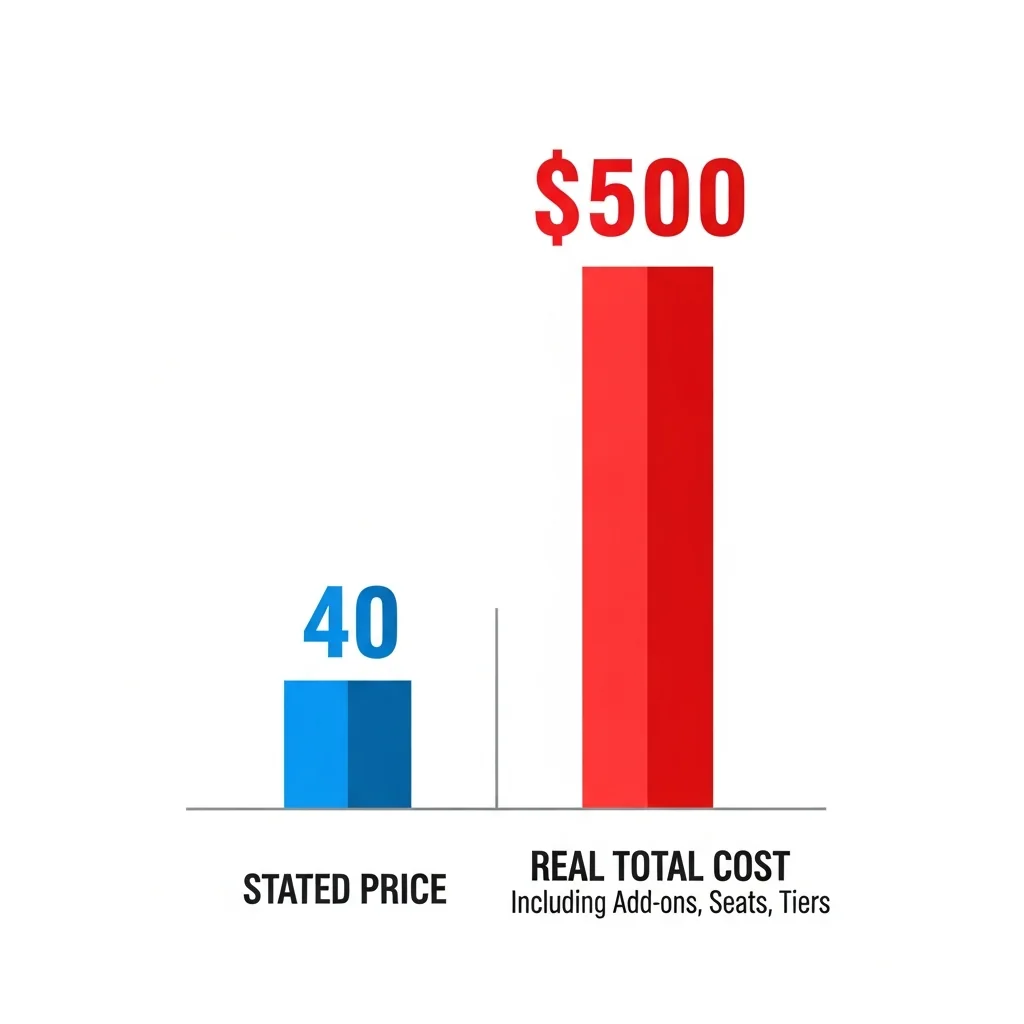
Real Annual Cost for a 3-Person Team
What a typical three-person freelance agency actually pays using ClickUp in 2026:
- ClickUp Business (3 users × $144/year): $432/year
- Harvest time tracking (3 users × $144/year): $432/year
- Total annual cost: $864/year for tasks + time tracking
Flat fee · no seat tax
Done calculating whether ClickUp is still worth it?
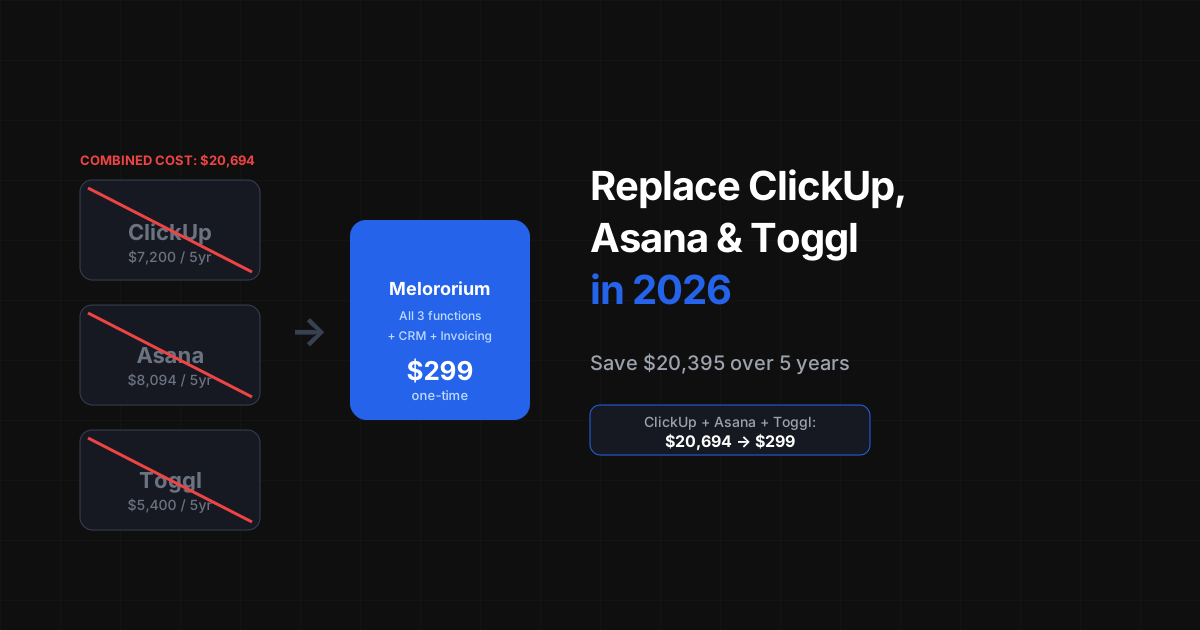
The math usually says no by year two. Melororium covers tasks, time tracking, and integrations for $29/mo flat instead of $288+/year with per-seat fees.
Starter $29/mo (4 users) · Agency $59/mo (15 users) · Studio $119/mo (25 users)
What Features Are Actually on Which Tier
What the tier breakdown actually means in practice:
- Free tier genuinely useful for: individual task management with basic views, up to 5 spaces
- Free tier limitations that force upgrades: no custom fields, no dashboard widgets, limited automations, restricted storage
- Business tier required for: custom dashboards, advanced time tracking reports, unlimited automations, advanced reporting
Why Users Are Leaving in 2026
ClickUp user forums in 2026 show a consistent set of complaints. The platform has grown more complex with each update — adding features faster than it fixes stability issues. Loading times have increased. The interface has more navigation than most small teams ever use. The pricing criticism follows a predictable pattern: each price increase is framed as adding value, but the features small teams actually relied on were already there. The new features justify the price hike for enterprise customers. For a freelancer or five-person agency, they're noise that costs $144/user/year to access. By 2026, ClickUp's product has diverged from the audience that found it in its early days. Enterprise teams get more of what they need. Small teams get a more complicated interface and a higher bill.
What ClickUp Users Are Switching To
The most common destinations for ClickUp users switching in 2026 depend on what they primarily used ClickUp for: For pure task management with minimal overhead: Linear (for development teams), Basecamp (for communication-first teams), or Melororium (for small agencies wanting flat-fee pricing with built-in time tracking). For comprehensive project management without per-seat billing: Melororium covers task management, time tracking, and Slack/Gemini integration in one workspace at a flat monthly fee — no seat cost, no per-user billing.
Melororium
Try it in Melororium
Melororium — ClickUp alternative with flat monthly fee, built-in time tracking, and no per-seat billing
Boards that run themselves
Kanban with subtasks, priorities and a timer on every card
Demo request from Bloom Cosmetics
Website redesign · due Oct 14