Why Agencies Lose Money on Retainer Clients — And Don't Notice Until Month 4
Retainer clients feel like stable income. Until you track actual hours against them and realise you've been delivering 40 hours for a 20-hour retainer for three months. Here's how to stop it.

Contents
One flat fee for the whole team
Tasks, timers, CRM and invoices in one workspace. From $29 a month, no seat tax.
Start free demo14 days · no credit card
01. Why Retainers Become Money Losers
A retainer starts with a simple premise: the client pays a fixed monthly amount, and the agency delivers a defined scope within that budget. It's predictable revenue, lower acquisition cost than project work, and a signal of client trust. The problem begins the first month the agency delivers more than the retainer covers — and doesn't notice. Maybe the client had an urgent need. Maybe the brief expanded mid-month. Maybe the team just worked until the work was done rather than stopping at the retainer hours. Whatever the reason, the month closes with more hours delivered than the retainer paid for, and nobody flags it because nobody is tracking hours against the retainer ceiling.
"We found a retainer client we'd had for six months where we'd been delivering 35-40 hours against a 20-hour retainer every single month. Nobody on the team had noticed because the invoice never changed."
02. The Over-Delivery Pattern and Why It's Invisible
Retainer over-delivery is invisible for a specific reason: the invoice is always the same. Every month, the client receives an invoice for the retainer amount, it gets paid, and the relationship feels fine. The revenue line doesn't change. What changes — invisibly — is the hours invested. The account that was generating a healthy margin in month one is generating a lower margin in month three, and might be approaching break-even or below by month four, without any change in the invoice or the client relationship to signal the problem.
"We found a retainer client we'd had for six months where we'd been delivering 35-40 hours against a 20-hour retainer every single month. We'd effectively been working for them half-time at no charge. Nobody on the team had noticed because the invoice never changed."
— Agency operations lead, 12-person studio
03. Month 1 to Month 4: How the Problem Compounds
Here's a concrete example of the compounding effect. A retainer is priced at $3,000/month for 20 hours. Your blended team rate is $150/hour, so the retainer fully covers 20 hours. - Month 1: 22 hours delivered. 2 hours over — $300 shortfall. Nobody notices. - Month 2: 24 hours delivered. 4 hours over — $600 shortfall. The client mentioned some additional requirements. - Month 3: 27 hours delivered. 7 hours over — $1,050 shortfall. The project scope has drifted. - Month 4: 31 hours delivered. 11 hours over — $1,650 shortfall. The account is now operating at a loss. Cumulative over four months: 24 hours delivered above the retainer value, representing $3,600 in work delivered but not billed.

04. The Specific Numbers That Show the Loss
The calculation every retainer relationship needs monthly: actual tracked hours × blended hourly rate vs retainer invoice amount. If tracked hours × rate exceeds the invoice, the account is over-delivering. The gap is the subsidy the agency is providing to the client without invoicing for it. Most agencies can tell you their retainer invoice amount immediately. Very few can tell you the current month's tracked hours against that retainer without opening a time tracker and manually running the numbers. The ones that can are the ones with time tracking and client billing in the same system.
Flat fee · no seat tax
Stop subsidising retainer clients without knowing it.
Track retainer hours in real time and see mid-month if you're on pace to over-deliver — before the month closes.
Starter: $29/mo (4 users)
Agency: $59/mo (15 users)
Studio: $119/mo (Unlimited users)
05. How to Track Hours Against a Retainer Monthly
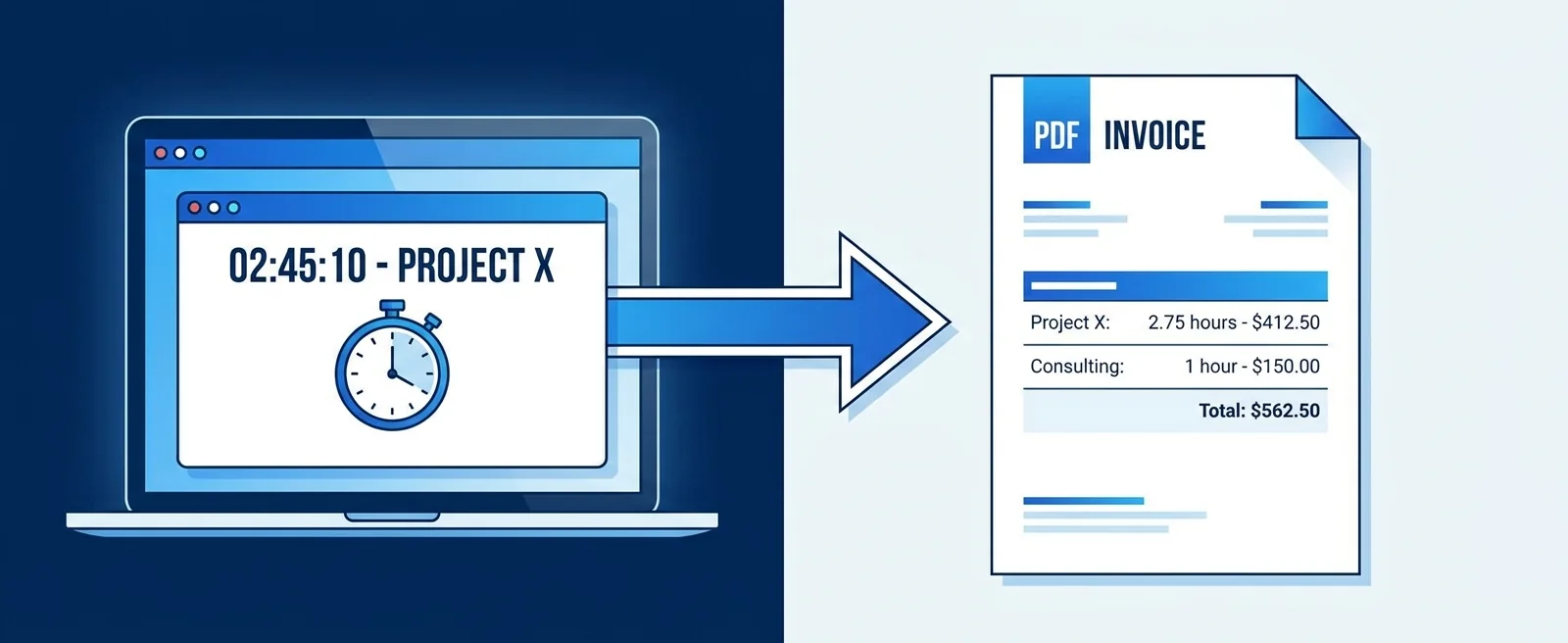
Step 1: Set up the retainer as a recurring project. The retainer client gets a project in your workspace with a monthly reset — a new 'month' project that captures only this month's tasks and hours. Step 2: Track all hours against tasks within the retainer project. Every task for this client goes into the retainer project. Every hour worked is tracked by the team member doing it, against the specific task. Step 3: Run the work report at mid-month. Two weeks into the month, open the <a href="/blog/client-work-report">client work report</a> for the retainer client. How many hours have been logged so far? Are you on pace to be within scope, or are you tracking to exceed it? Mid-month is the right time to have the conversation — not at invoice time when the month is over.
Melororium
Track Retainer Hours in Real Time
Melororium Timers + Work Reports — track hours per retainer client and see mid-month pace before over-delivery becomes a pattern.
06. The Conversation the Data Enables
When mid-month tracking shows you're 14 hours in on a 20-hour retainer with two weeks to go, you have two options — both better than discovering the problem at invoice time. Option one: have the scope conversation proactively: 'We've logged 14 hours this month and we're at the midpoint — we're on pace to exceed the retainer. Here's what we can complete within scope and what would require an adjustment.' Option two: actively manage the remaining work to stay within scope. Neither option is available if you discover the over-delivery at the end of the month.
07. Structuring Retainers to Prevent Over-Delivery
The structural fixes that reduce over-delivery risk: explicit hours-per-month stated in the retainer agreement (not just a project scope), a mid-month check-in built into the account management process, and a defined protocol for what happens when the client makes requests that would exceed the monthly allocation. The most important structural element: the retainer agreement should state explicitly what happens when the monthly hours are consumed. Either additional work is paused until the following month, or additional hours are billed at the day-rate equivalent. Ambiguity on this point is what allows over-delivery to become an expectation rather than an exception.
08. The Monthly Retainer Review
The habit that prevents the month-four discovery: a monthly retainer review for every active retainer client. Ten minutes per account, at the end of each month, comparing the work report hours against the retainer scope. If the account is consistently over-delivering, the conversation happens in month two — not month four.
Boards that run themselves
Kanban with subtasks, priorities and a timer on every card
Demo request from Bloom Cosmetics
Website redesign · due Oct 14