You Think That Client Pays Well. Your Numbers Disagree.
I tracked one 'great' project for 6 weeks and found out I was earning $14/hour. That's when I built Task Profitability Logging.

Contents
One flat fee for the whole team
Tasks, timers, CRM and invoices in one workspace. From $29 a month, no seat tax.
Start free demo14 days · no credit card
The $14/Hour Dream Client
There was a client I loved. Friendly emails, paid on time, never haggled. I quoted him $1,200 for a project I assumed would take 15 hours. Easy money — about $80/hour. I told my freelance friends he was a keeper. Then I actually logged the hours. Not the hours I thought I worked — the real ones. The 40-minute 'quick call' that happened every Tuesday. The three rounds of revisions I never charged for. The 90 minutes I spent reformatting his messy source files before I could even start. By the end, I'd put 86 hours into a $1,200 project. That's $14 an hour. Less than I'd make doing literally anything else. And I'd told everyone he was my best client. Here's the part that stung: I had no way of knowing this in real time. I felt busy and paid, so I assumed I was doing fine. The dangerous clients aren't the ones who scream about invoices — they're the ones who feel pleasant while quietly draining 30 unbilled hours a month out of you.
"The dangerous clients aren't the ones who scream about invoices — they're the ones who feel pleasant while quietly draining 30 unbilled hours a month out of you."
Why You're Flying Blind (And It's Not Your Fault)
Most freelancers measure success by income, not by rate. You see $4,800 land in your account this month and feel good. But income hides everything that matters. Two freelancers can both make $4,800 — one worked 50 hours and one worked 130. They are not in the same business. The tools we use make this worse, not better. Time trackers tell you how many hours you logged. Project tools tell you which tasks are done. Doc tools hold your notes. But none of them connect the three numbers that actually decide whether you're running a healthy business: time spent, money earned, and the rate that falls out of dividing one by the other. So you end up with hours in one app, invoices in another, and 'profitability' living nowhere except a gut feeling. I lived like that for two years. I paid for the privilege, too — over $560 a year across three subscriptions, none of which could tell me the one thing I most needed to know.
I Tried to Fix It With Spreadsheets. It Lasted Nine Days.
My first attempt wasn't a product. It was a Google Sheet. Columns for client, estimated hours, actual hours, fee, and a formula that spat out my real hourly rate. For about a week it was genuinely useful. Then it died, the way all freelancer spreadsheets die. I forgot to log a session. Then I forgot two. Then a week went by and the sheet was so out of date that updating it felt like homework, so I didn't. The math was right; the workflow was wrong. Logging profitability can't be a separate ritual you do on Sundays — by Sunday you've already forgotten how long that Tuesday call ran. That's when it clicked for me. The problem wasn't that I lacked data. The problem was that profitability needs to live inside the task itself, captured as the work happens.
Flat fee · no seat tax
Find out which clients are actually worth your time.
Task Profitability Logging is built into Melororium — no separate app, flat-fee from $29/mo, your data stays yours.
Starter: $29/mo (4 users)
Agency: $59/mo (15 users)
Studio: $119/mo (Unlimited users)
How Task Profitability Logging Actually Works
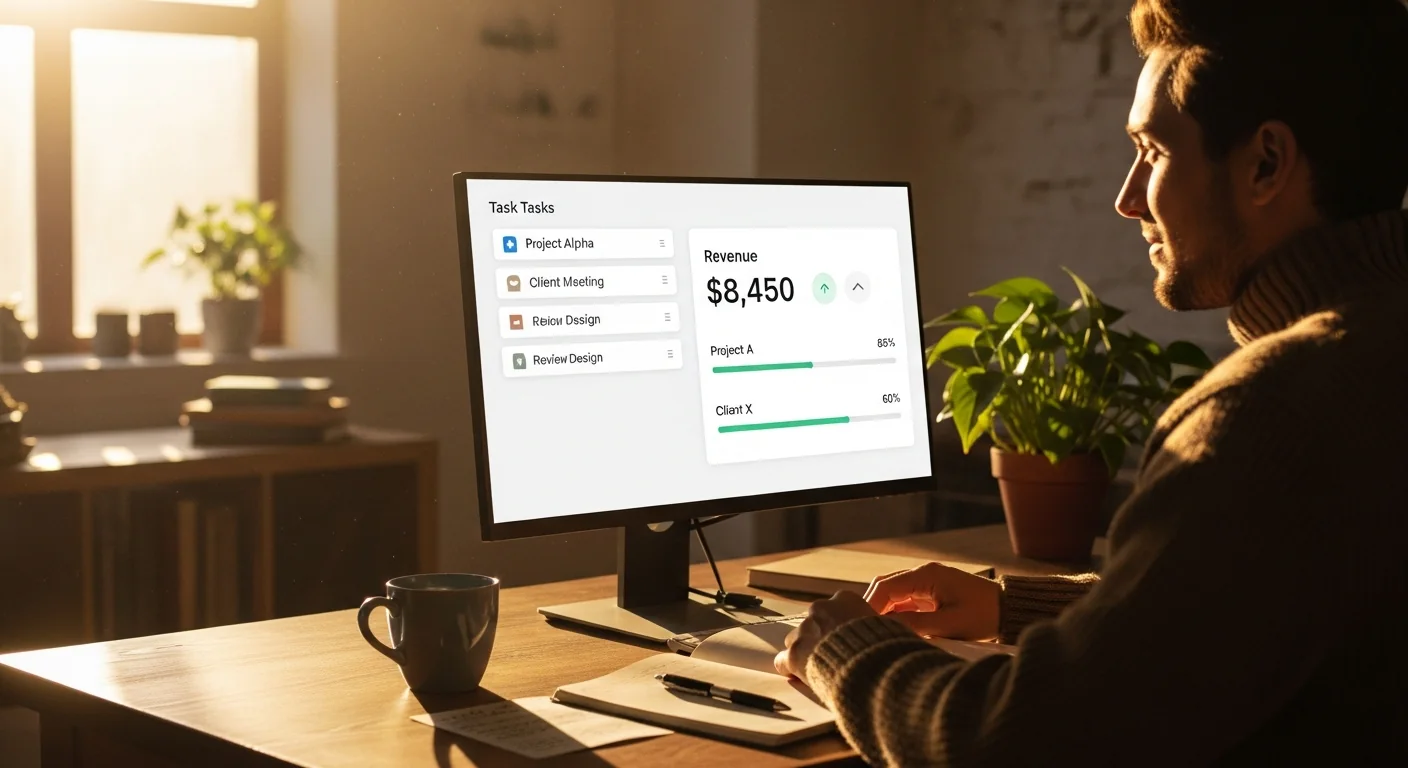
When you create a task in Melororium, it has two fields most tools ignore: the value attached to it and the time you've actually spent. The task quietly does the division. A task tagged '$1,200 fixed fee' that's eaten 60 hours shows you $20/hour in plain text, right there.
- Every task carries its own money and time — see your real rate per task the moment it drops below your target
- Profitability rolls up to client and project level — find the clients who are actually paying you well vs the ones who feel good but drain you
- Offline and yours — your rates and client fees live on your machine, no row limits, no upgrade to unlock reports
Melororium
Try it in Melororium
Task profitability built into Melororium — no separate app, no monthly fee
Why Flat-Fee Pricing Changes Everything
I could charge $12/month for this. It would probably make more money. Subscription math is brutal in the company's favor — you'd pay me $560 over four years for a feature you mostly set up once. But I built Melororium specifically because I was furious about paying rent on tools I'd already learned, already configured, already depended on. Charging you a monthly fee to find out your hourly rate would be a special kind of irony — the very subscription drain I was trying to escape, dressed up as a 'productivity tool.' Melororium Agency: $59/mo flat for the whole team. The first time it shows you a client paying you $14/hour, it's already paid for itself several times over.
Boards that run themselves
Kanban with subtasks, priorities and a timer on every card
Demo request from Bloom Cosmetics
Website redesign · due Oct 14