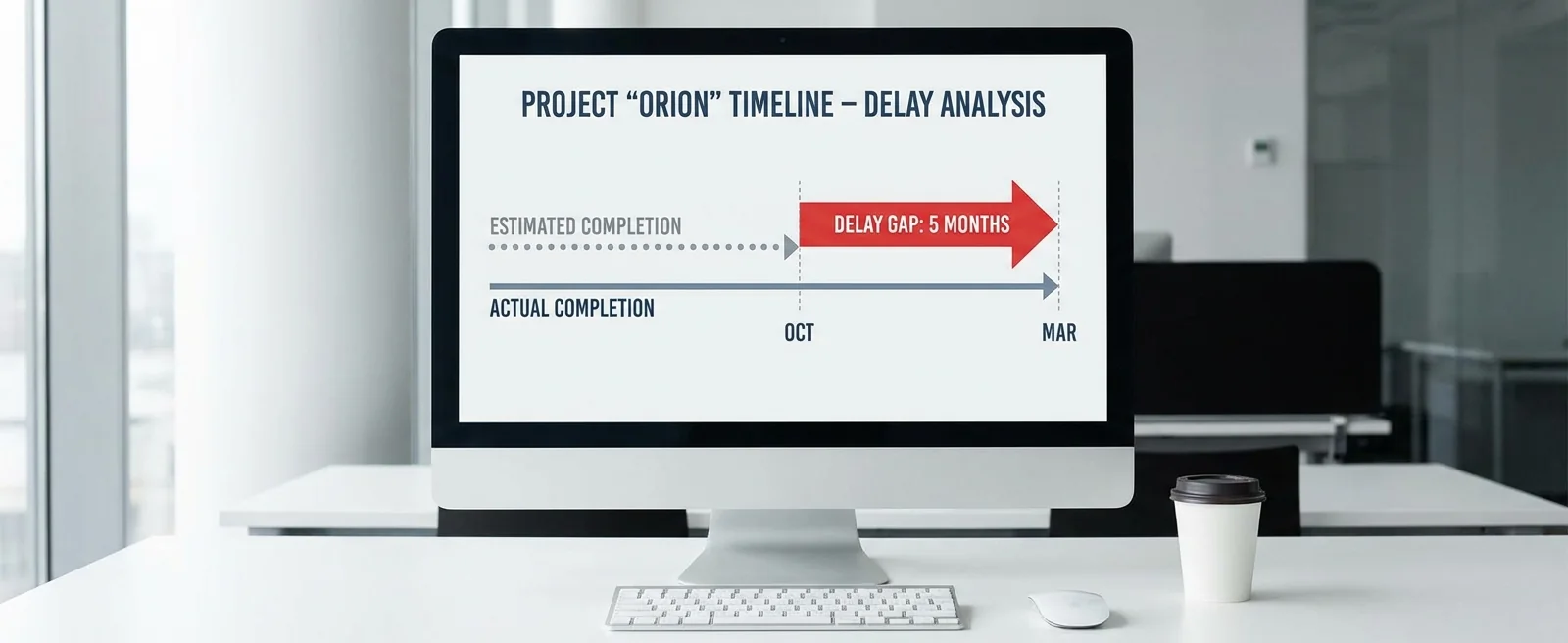
You Think You Made $4,000 This Month. Your Reports Say $2,840.
I spent two years billing clients without knowing my real hourly rate. When I finally built the report that showed it, I almost quit a client on the spot.

Contents
One flat fee for the whole team
Tasks, timers, CRM and invoices in one workspace. From $29 a month, no seat tax.
Start free demo14 days · no credit card
I Billed a Client $3,000 and Lost Money on the Project
Here is the exact moment this article comes from. I finished a website project for a SaaS client. Quoted $3,000 flat. Felt good about it — clean scope, repeat client, paid on time. Three months later I sat down to do my quarterly numbers. I dug through my calendar, my Slack timestamps, the half-dead Toggl entries I'd forgotten to stop. The project that 'felt' like 30 hours was actually 58. That's a real rate of $51.72/hour. My target was $90. I had effectively worked the back half of that project for free, and I never knew because nothing told me. That's the thing about freelancing that the courses don't mention: you can be busy, booked, and broke at the same time. You feel productive. The invoices look fine. But the gap between what you think you earn and what you actually earn lives in the hours nobody counts — the revisions, the 'quick calls,' the scope creep you absorbed to be nice. A work performance report is the one document that closes that gap.
"The subscription reporting irony: the longer you use it, the more it costs — even though the value is just 'keep showing me my own history.' You're renting access to your past."
Why the Tools You Already Pay For Are Bad at This
Here's what frustrated me. I was paying for tools that were perfectly capable of showing me this — and they deliberately didn't, or buried it behind a higher tier. Harvest tracks time beautifully. But the reporting that matters — profitability per project, real effective rate — sits in their Pro plan at $12/seat/month. ClickUp has 'Dashboards,' but you build them yourself, and the useful widgets are gated above the Free tier. The deeper problem is incentive. A subscription tool wants you logged in and active — that's the metric that keeps you renewing. A report that says 'this client is unprofitable, drop them' doesn't serve that goal. It serves you. So the honest, decision-driving reports are either missing, dumbed down, or locked one tier above whatever you're paying.
I Stopped Trusting 'Feelings' and Started Trusting the Numbers
For a long time I told myself I 'knew' which clients were good. I was wrong about half of them. The chatty client who paid premium rates? Profitable on paper, but the calls ate 6 unbilled hours a month — net loss. The cheap client I almost dropped? Sent clean briefs, never asked for revisions, paid in 48 hours. My real rate with them was higher than the 'premium' one. I tried fixing this with spreadsheets first. Every Sunday night I'd export time data, paste it in, write formulas. It worked for about three weeks, then I stopped, because manual reporting is a tax you pay in willpower and willpower runs out. The report only helps if it builds itself. So when I started building Melororium, the performance report wasn't a feature I added later. It was the reason.
Flat fee · no seat tax
Know your real rate. Stop guessing.
The performance reports run on data you already have — no spreadsheet weekend required.
Starter: $29/mo (4 users)
Agency: $59/mo (15 users)
Studio: $119/mo (Unlimited users)
What Work Performance Reports Actually Do in Melororium
The report takes your tracked time against what you billed and gives you the actual dollars-per-hour — not your quoted rate, your real one after revisions, calls, and scope creep.
- Real effective rate per client and project — flags when a project drops below your target rate automatically, no formula building
- Time-to-revenue breakdown — see where your hours go vs where your income comes from, kills the unprofitable activities instantly
- Plain-language summaries — the report writes the conclusion for you: 'Project A is 18% over budget. Your effective rate is up $7/hour.'
Melororium
Try it in Melororium
Work performance reports in Melororium — runs on your existing tasks and time data
Why a Flat Price Makes Sense for Something Like This
A performance report is most valuable over time. Its whole point is comparison — this month versus last, this client versus that one, this quarter's rate versus where you started. The cruel irony of per-seat reporting tools is that the longer you use them and the more your team grows, the more they cost, even though the value to you is just 'keep showing me my own history.' So I priced Melororium flat, from $29/mo, the same whether it's 1 person or 4. Over three years on the Starter plan, that's $1,044 total. The ClickUp + Notion + Harvest stack would run you over $1,690 across the same three years, and you'd still be assembling the report yourself.
Boards that run themselves
Kanban with subtasks, priorities and a timer on every card
Demo request from Bloom Cosmetics
Website redesign · due Oct 14