What is a Retainer?
Retainer
A retainer is a recurring monthly fee a client pays for an agreed scope of ongoing work, instead of paying per project.
A retainer is an ongoing fee-for-service agreement where a client pays a fixed monthly fee in exchange for a defined scope of work or a block of hours. Retainers are the revenue model most agencies aspire to because they provide predictable recurring income without the sales cycle of project-by-project work.
For a 10-person agency, the difference between 30% retainer revenue and 80% retainer revenue is the difference between constant new business pressure and stable team capacity planning.
Types of Agency Retainers
Three main retainer structures exist, each with different billing and delivery logic.
- Hours-based retainer: client buys X hours per month at a fixed rate. Hours log tracks usage; unused hours may roll over or expire depending on contract terms.
- Deliverable-based retainer: client pays for a defined set of deliverables per month: 4 blog posts, 8 social graphics, 1 analytics report. Fixed scope regardless of hours.
- Value-based retainer: fee set based on client outcomes rather than hours or deliverables. Harder to sell but highest-margin when the value delivered is clear.
Managing Retainer Hours Without Overdelivering
The most common retainer management problem: overdelivering. A client on a 20-hour/month retainer gets 28 hours of actual work because the team doesn't track against the budget, and nobody notices until the invoice math stops working.
The fix is a retainer hours tracker that shows current month usage against the contract cap in real time. When a project manager can see 'we've used 17 of 20 hours' at any moment during the month, they make different decisions about scope and prioritization than when they're guessing.
Managing Retainers in Melororium
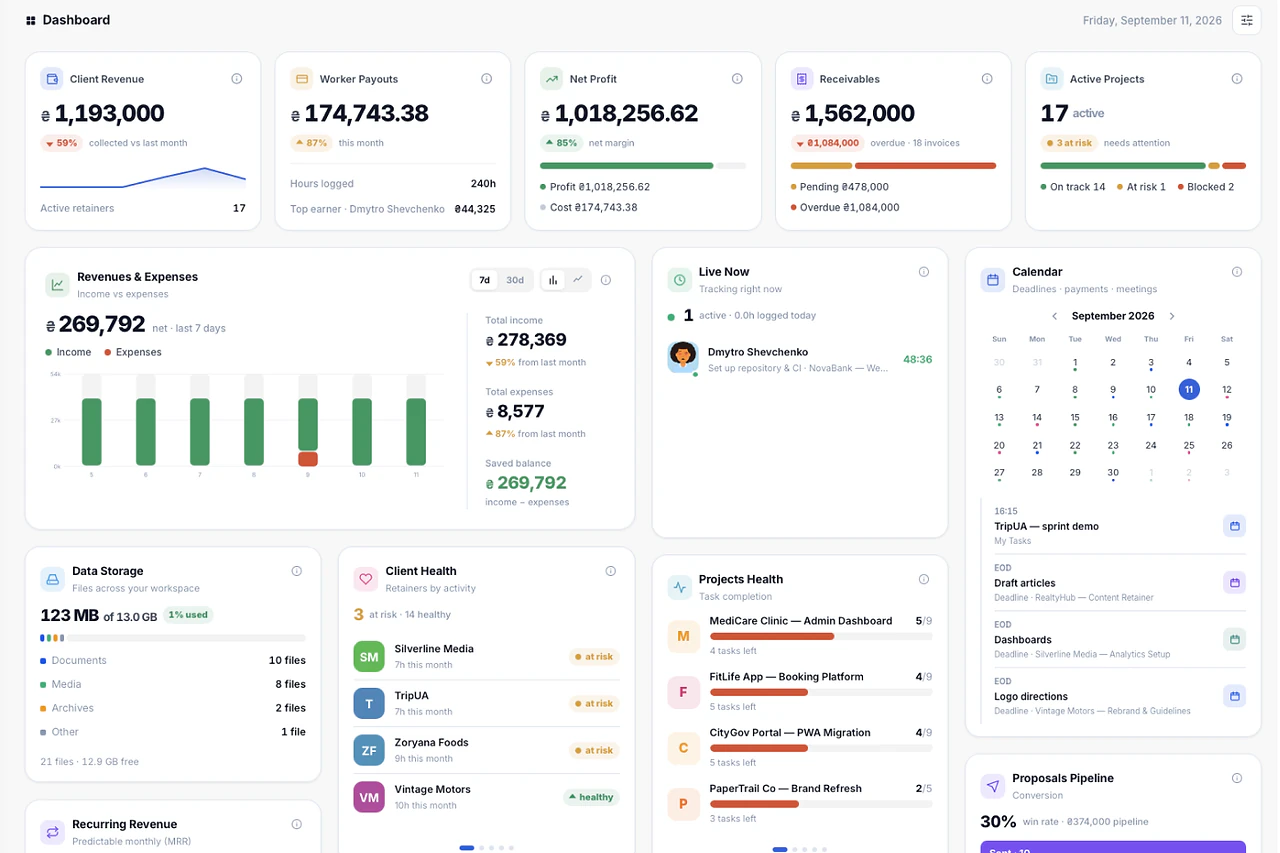
Melororium's CRM client cards include a retainer budget field that tracks contracted hours versus hours logged. The Work Reports module shows hours per client per period, making the comparison between contracted and actual hours immediate. Invoice generation from tracked hours ensures retainer invoices reflect the exact hours worked, not estimates.
In Melororium
Manage retainers in Melororium
Common mistakes with retainer
What teams get wrong most often, and what to do instead.
- 1
Undefined scope inside the retainer
Agreeing to a monthly fee for "ongoing support" with no defined hours or deliverables.
- 2
Not tracking hours against the retainer
Billing the same flat fee every month without checking if delivered work matches what's owed.
- 3
No rollover policy
Never deciding what happens to unused retainer hours.
- 4
Letting scope creep in gradually
Adding "just one more thing" to retainer work each month because it's already a recurring relationship.
Frequently asked questions
What is a retainer?
A retainer is an ongoing monthly fee agreement where a client pays a fixed amount for a defined scope of work or block of hours, creating predictable recurring revenue for the agency.
What's the difference between a retainer and a project?
A project has a defined start, end, and scope. A retainer is ongoing: same client, same recurring fee, renewed monthly or annually. Retainers provide stability; projects provide revenue spikes.
How do you track retainer hours?
Log all work against the client's project in your time tracking system. A retainer budget tracker compares logged hours against the monthly contracted amount, showing usage in real time so you don't overdeliver or underdeliver.
What happens when a client exceeds their retainer hours?
Handle overage in the contract before it happens. Three common models: overage billed at an agreed hourly rate, overage rolled into next month's retainer, or hard cap where additional work stops until the next cycle. Most agencies prefer hourly overage billing for predictability on both sides.