Absence Management: Definition, Types & Bradford Factor
Absence Management
Absence management tracks every employee absence, planned, unplanned, or unauthorized, so real patterns get caught without punishing normal leave.
Absence management is the process of tracking, managing, and where appropriate, reducing employee absences. It covers all types: planned (vacation, approved leave), unplanned (sick days, emergencies), and unauthorized (no-call, no-show). The goal is not zero absences (impossible and undesirable) but consistent, fair handling and sufficient data to distinguish normal variation from patterns that need attention.
What is Absence Management? Quick Definition
Absence management is the process of tracking, classifying, and where needed reducing employee absences. It covers planned leave (vacation, approved time off) and unplanned absences (sick days, emergencies). The goal is fair, consistent handling of all absence types, and enough data to spot patterns that need attention.
- Planned absence: vacation and approved leave, expected, recorded in advance
- Unplanned absence: sick days, emergencies, unpredictable, most disruptive to delivery
- Certified absence: sick leave with medical documentation, typically required after 3+ consecutive days
- Bradford Factor: formula (S² × D) that measures the disruptive impact of frequent short absences vs. rare long ones
Types of Employee Absences
Not all absences are the same. Distinguishing types is the first step to managing them.
- Planned absence: vacation, approved personal leave, medical appointments scheduled in advance
- Unplanned absence: sudden illness, family emergency, unexpected personal situation
- Certified absence: sick leave supported by a medical certificate, typically required after 3+ consecutive sick days
- Unauthorized absence: no communication from the employee, no approval granted
The Bradford Factor
The Bradford Factor is a formula for measuring the disruptive impact of unplanned absences: B = S² × D, where S is the number of separate absence spells and D is the total days absent. The formula heavily weights frequency over duration, because multiple short absences are more disruptive to team operations than one long planned absence.
A team member with 6 separate one-day absences scores 6² × 6 = 216. A team member with one planned two-week absence (10 days) scores 1² × 10 = 10. Same total days absent, very different operational impact.
Most teams don't track the Bradford Factor formally, but the principle that frequency matters more than duration for unplanned absences is useful for identifying patterns.
What an Absence Management System Does
An absence management system records every absence with type, date, and duration. It distinguishes planned from unplanned. It shows managers which team members have the most frequent unplanned absences. And it connects absence data to capacity: if two developers are unexpectedly out on the same day a sprint review is scheduled, that's a conflict a system can surface in advance if it knows about standing leave.
- Centralized record: all absences logged in one place, not scattered across email and Slack
- Type classification: planned vs. unplanned, certified vs. uncertified
- Pattern detection: flagging team members with high absence frequency
- Capacity integration: absence calendar visible to project managers alongside project deadlines
In Melororium
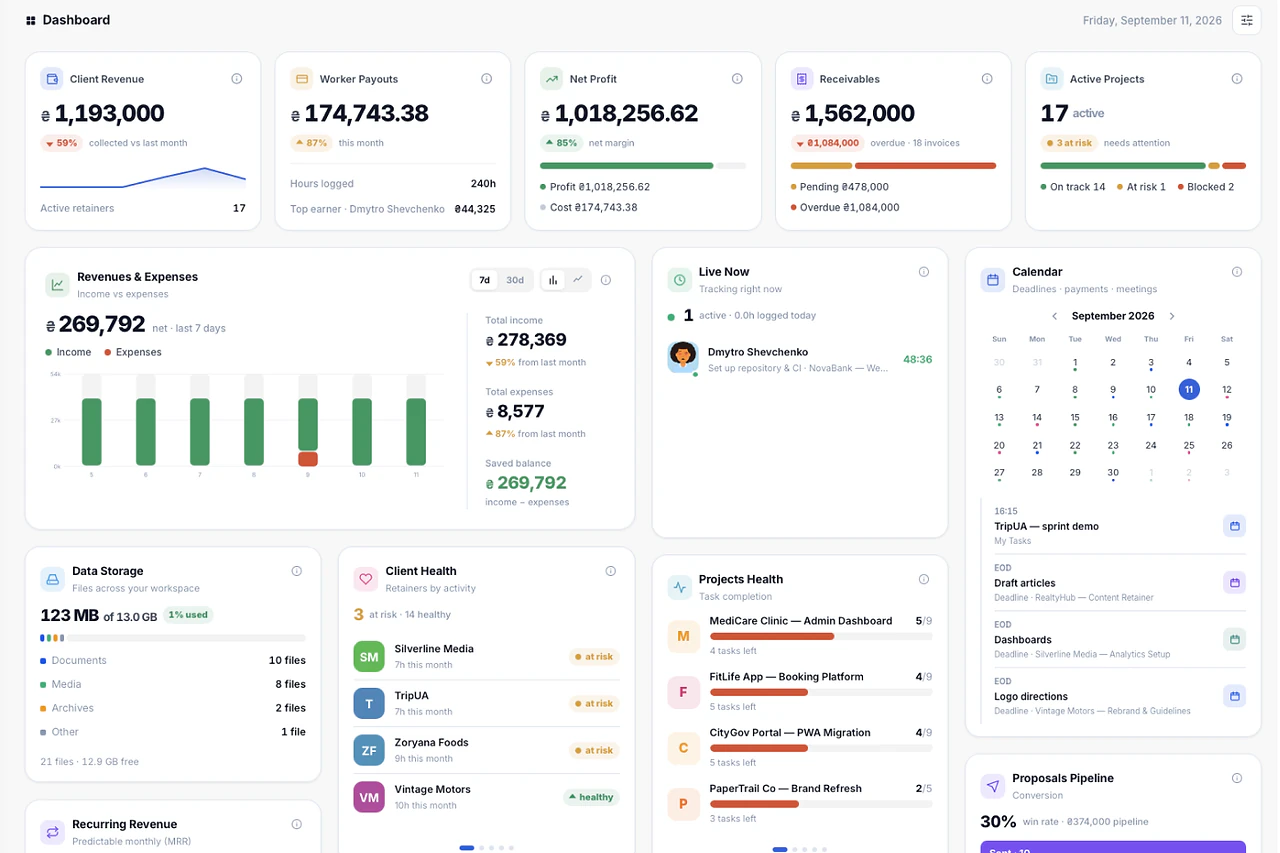
Track team absences in Melororium
Common mistakes with absence management
What teams get wrong most often, and what to do instead.
- 1
Treating every absence the same
Planned leave, sick days and no-shows need different responses. One policy for all three punishes people who booked vacation in advance.
- 2
Counting days instead of frequency
Ten separate single days are far more disruptive than one two-week leave. Track frequency (the Bradford Factor does this) and not only totals.
- 3
Tracking in a spreadsheet nobody updates
If absences live outside the tool where work is planned, the calendar lies and deadlines get set on days people are away.
- 4
Letting people approve their own time off
Self-approval turns a policy into a formality. Approval by a manager keeps coverage visible and keeps the record honest.
Frequently asked questions
What is absence management?
Absence management is the process of tracking, classifying, and managing employee absences, covering planned leave, unplanned sick days, and unauthorized absences.
What is the Bradford Factor?
The Bradford Factor is a formula (S² × D) that measures the disruptive impact of absences by weighting frequency heavily over duration. Multiple short absences score higher than one long planned absence of the same total days.
How is absence management different from time off management?
Time off management focuses on planned leave: requests, approvals, balances. Absence management covers all absences including unplanned ones, and is more focused on patterns and team impact.
What does absence management cost for small teams?
Most standalone absence management tools charge per seat ($3-8/user/month). For a 10-person team, that's $360-960/year. Melororium includes absence and time off tracking as part of its $59/mo Agency flat-fee plan, with no additional HR software needed.