What is a Daily Standup?
Daily Standup
A daily standup is a short daily check-in where each team member covers three things: what they finished, what they're working on next, and what's blocking them.
A daily standup is a short, recurring check-in where each person on a team answers three things: what they finished since the last standup, what they're working on next, and what's in their way. The name comes from the original practice of holding the meeting standing up, on purpose, so nobody gets comfortable enough to let it run long.
A standup is not a status meeting for a manager. It's a coordination meeting for the team itself. The point isn't to report progress upward; it's to surface blockers early enough that someone can act on them the same day, and to let team members see what everyone else is doing so work doesn't collide or duplicate.
Standups started as a Scrum ceremony, but the format works for any team that coordinates daily, sprint-based or not. For a small agency or studio juggling several projects at once, a standup is often the one moment in the day when everyone sees the full picture instead of just their own slice of it.
The Standard Format: Three Questions
Most standups follow the same three-question structure, kept deliberately narrow so the meeting stays short:
- What did I finish since the last standup?
- What am I working on next, before the next standup?
- What's blocking me, or what do I need from someone else?
Timebox and Ground Rules
A standup that runs long stops being a standup. The format only works if the team protects a few rules.
- 15 minutes for a team of 6-8 people, less for smaller teams, more only if the team is unusually large
- Same time, same place, every day: consistency is what makes it a habit instead of another meeting to schedule
- No problem-solving in the room: if two people need to dig into a blocker, they take it offline right after
- Everyone reports to the team, not to the manager running the meeting
Async Standups for Remote and Distributed Teams
A live standup breaks down once a team spans more than 3-4 time zones; there's no single 15-minute window where everyone is awake and available. Async standups solve this by replacing the live call with a written update posted to a shared channel or board once each person starts their day.
The three questions stay the same. What changes is the format: a short message instead of a spoken update, posted by a set time (for example, by 11am local), with blockers flagged clearly enough that someone in another time zone can pick them up without waiting for a call. Async loses the real-time back-and-forth, but it keeps a written record, which live standups don't.
Common Failure Modes
Standups fail in predictable ways, and most of them are fixable once the team names the pattern:
- It turns into a status report aimed at the manager, and people start performing progress instead of surfacing real blockers
- It runs past 20-25 minutes because problem-solving happens live instead of after
- Blockers get mentioned but nobody follows up, so people stop bothering to raise them
- People with no dependency on the rest of the team that day still sit through the full meeting
Standups for Agencies Running Multiple Projects
A single team-wide standup breaks down once a 12-person studio is running 5-6 client projects with different sub-teams on each. Two structures work better in practice: a per-project standup for each active engagement, run by whoever leads that project, kept to the same three questions; or a single team-wide standup organized by project instead of by person, moving through each active project in turn rather than going around the room person by person.
Either way, the goal is the same: nobody should have to sit through 10 minutes of updates on a project they're not touching just to hear the two minutes relevant to their own work.
A Worked Example: 12-Minute Standup for a 6-Person Team
A 6-person team can move through a standup in about 12 minutes if each person keeps their update to roughly a minute and blockers get parked instead of solved live:
| Time | What happens |
|---|---|
| 0:00-0:01 | Facilitator opens: "Same three questions, blockers get parked for after" |
| 0:01-0:07 | Each of the 6 team members gives a roughly 1-minute update |
| 0:07-0:10 | Facilitator reads back any blockers raised and names who's following up |
| 0:10-0:12 | Anyone with a quick, standup-relevant announcement gets 30 seconds; longer topics move to a separate thread |
In Melororium
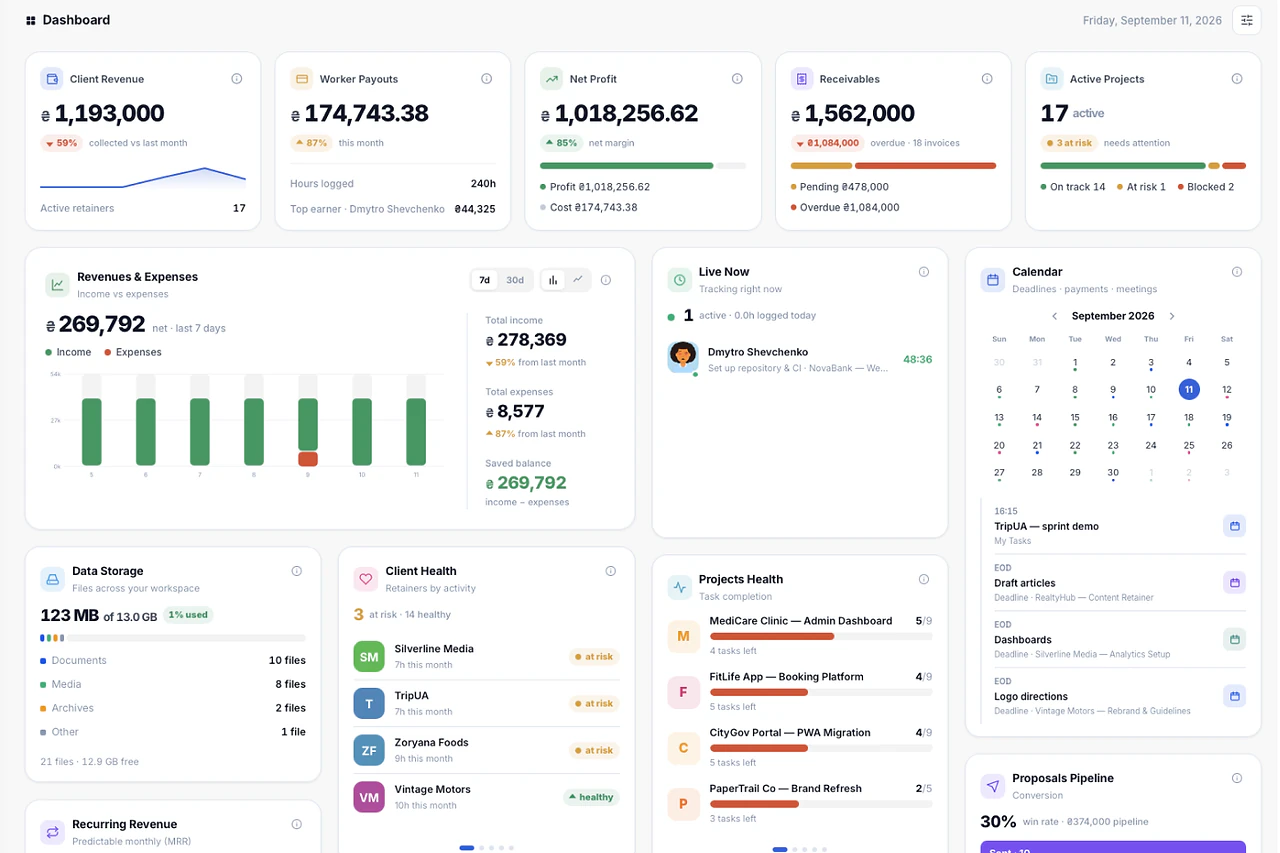
See who's working on what right now in Melororium
Common mistakes with daily standup
What teams get wrong most often, and what to do instead.
- 1
Letting it become a status report to the manager
People start directing updates at whoever's running the meeting instead of the team. Once that happens, the standup stops surfacing blockers and starts performing progress.
- 2
Solving problems live instead of parking them
Two people debug an issue in front of the whole team while the rest wait. The fix belongs in a separate conversation right after, not inside the 15-minute window.
- 3
Running it at a different time every day
Scheduling the standup around whoever's free that morning. Without a fixed time, it stops being a habit and starts being one more meeting people have to find on the calendar.
- 4
Requiring everyone to attend regardless of relevance
Making a standup mandatory even for someone with no dependency on the rest of the team that day. Attendance should track relevance, not a blanket policy.
Frequently asked questions
How long should a standup actually run?
15 minutes is the common ceiling for a team of 6-8. If it consistently runs longer, the cause is almost always live problem-solving that should happen in a smaller, separate conversation instead.
What if the team is fully remote across time zones?
Switch to an async format: each person posts their update to a shared channel by a set time instead of joining a live call. It keeps the same three questions and adds a written record the live version doesn't have.
Do standups only apply to Scrum teams?
No. Standups started as a Scrum practice, but any team coordinating daily work, sprint-based or continuous flow, can run one. The format doesn't require the rest of the Scrum framework around it.
What's the difference between a standup and a status report?
A standup is peer-to-peer coordination aimed at the team, run to surface blockers the same day. A status report is a summary aimed upward, usually written after the fact, for someone who wasn't in the room while the work happened.
Does Melororium support daily standups?
Melororium doesn't run a scripted standup meeting, but the Dashboard's Live Now view shows who's working on what across the team in real time, which covers a good part of what a standup is for without needing everyone in a call.