What is a Deadline?
Deadline
A deadline is the date by which a piece of work has to be finished, with real consequences attached to missing it.
A deadline is the date by which a piece of work has to be done. It can attach to a single task (the copy is due Thursday), a deliverable (the design file is due at the end of the month), or an entire project (the site goes live December 1). What makes something a deadline rather than just a date on a calendar is the consequence attached to missing it.
Not every deadline carries the same weight. A hard deadline is set by something outside the team's control, a launch event, a tax filing date, an ad campaign that starts on a fixed day, and missing it has a real cost. A soft deadline is an internal target the team set for itself, useful for pacing work, but negotiable if circumstances change.
For a team running several client projects at once, deadlines compound. The same two or three people often carry work across multiple projects, so a deadline slip on one project rarely stays contained to that project alone.
Hard Deadlines vs Soft Deadlines
Treating every deadline as equally fixed is one of the fastest ways to lose credibility with a team: if everything is "urgent," nothing is.
| Type | Set by | Example | If missed |
|---|---|---|---|
| Hard deadline | Something outside the team's control | Ad campaign launch, event date, tax filing | Real cost: lost spend, missed event, penalty |
| Soft deadline | The team itself, as an internal target | "Let's aim to have the draft done by Friday" | Negotiable, the date can move without external damage |
How to Set a Deadline You Can Actually Hit
Most missed deadlines trace back to how the deadline was set, not to what happened during the work. Two habits cause most of the damage: estimating the best case instead of the likely case, and forgetting that a person working 40 hours a week isn't available for 40 hours of project work.
A more reliable process: estimate the work, add 15-20% buffer for the unexpected, then subtract the time that meetings, admin, and other active projects will take from that person's week. A task estimated at 3 days with a 20% buffer and two days already booked for other work should land on a deadline 5 working days out, not 3.
Deadline Risk: Early Warning Signs
A deadline rarely gets missed without warning. The signs usually show up early enough to act on, if someone is watching for them:
- No work has started by the time half the available window has passed
- The person responsible hasn't given a status update in 3-4 days
- A dependency, a client approval, an asset from another team, is stuck with no date attached
- The remaining work has grown since the deadline was set, but the date hasn't moved
Deadline, Milestone, and Due Date
The three terms overlap enough to cause confusion. A due date is the deadline attached to one specific task, the smallest unit. A milestone is a checkpoint that marks the completion of a phase or a major decision, and it usually has a deadline attached to it, but not every deadline marks a milestone. A project deadline is the outer boundary: the date the whole engagement is due, made up of every task and milestone deadline underneath it. A single task's due date slipping by a day rarely matters. A milestone deadline slipping usually does.
What to Do When You're Going to Miss a Deadline
The moment a deadline looks at risk, not the moment it's already missed, is when to say something. Waiting until the date has passed turns a manageable conversation into a damage-control one.
- Flag the risk as soon as it's visible, ideally days before the date, not on the day itself
- State the cause in one factual sentence, without turning it into a lengthy justification
- Propose a new date, don't just report that the old one won't hold
- Say plainly whether anything else downstream is affected
Cascading Deadlines Across Multiple Projects
On a small team running several projects, deadlines rarely fail in isolation. If a developer is booked on Project A and Project B, a three-day slip on Project A's deadline often pushes Project B's start by close to the same three days, since the same person can't be in two places.
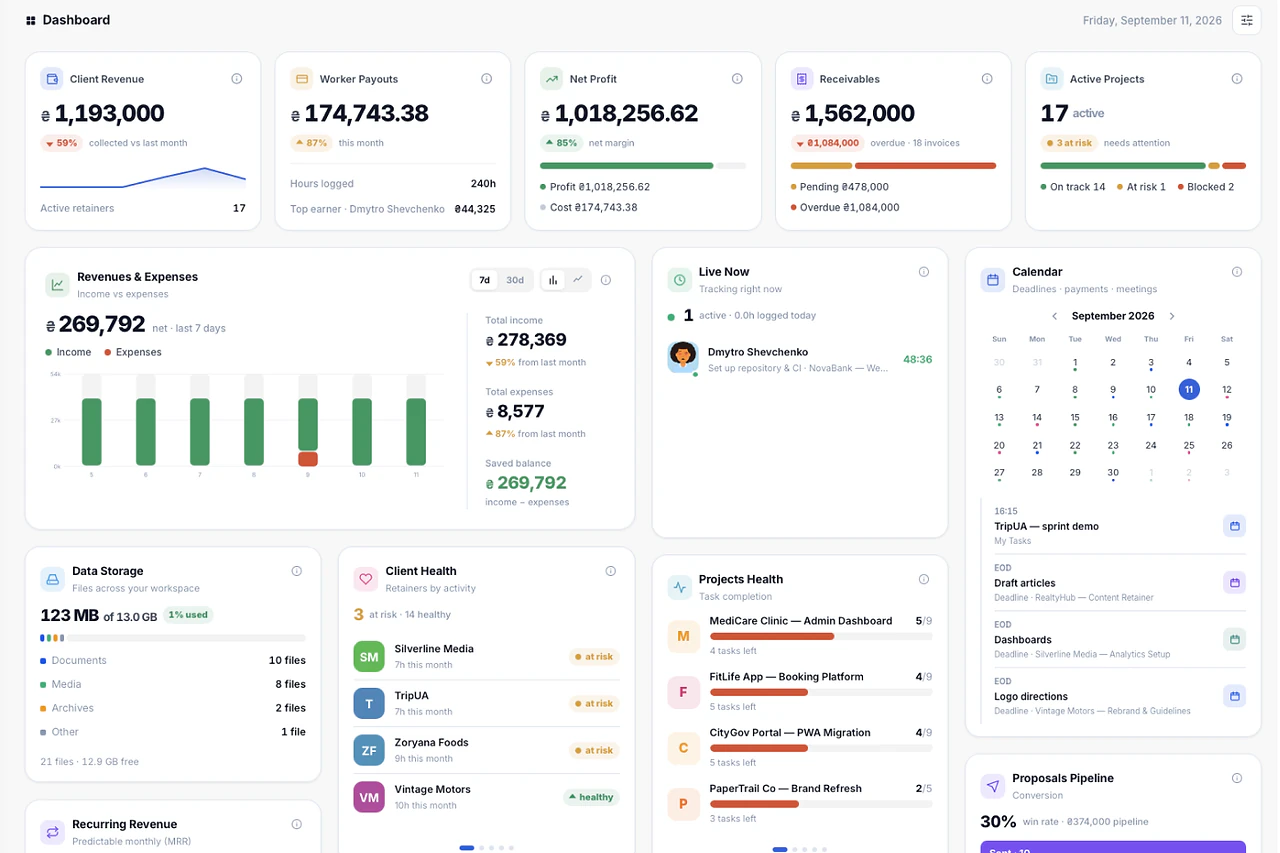
The fix isn't heroics, working weekends to protect both dates. It's visibility: a shared calendar or board showing every deadline across every active project, so a slip on one shows up immediately as a risk on the others, instead of surfacing as a surprise two weeks later.
In Melororium
Get deadline risk alerts before a date is missed
Common mistakes with deadline
What teams get wrong most often, and what to do instead.
- 1
Setting the deadline before scoping the work
Picking a date that sounds good to the client, then working backward to figure out if the scope fits. The date should follow the estimate, not the other way around.
- 2
Treating every deadline as equally hard
Applying the same urgency to a soft internal target and a fixed external launch date. Once the team learns that "deadline" doesn't always mean fixed, they stop trusting any of them.
- 3
Staying quiet until the date has already passed
Waiting to raise a risk until the deadline itself, when there's no time left to adjust scope, add help, or reset expectations with the client.
- 4
Leaving a shared deadline without a single owner
Assigning a deadline to "the team" instead of one named person. When everyone is responsible, the deadline usually slips without anyone catching it early.
Frequently asked questions
Should every task have a deadline?
No. Small, low-stakes tasks with no real cost to slipping don't need one; adding a date to everything just dilutes the deadlines that actually matter. Reserve deadlines for work with a real consequence attached to being late.
What causes most missed deadlines?
Optimistic estimating and hidden dependencies, more often than a team working too slowly. Most projects run late because a buffer was never built in or because a task was waiting on something outside the team's control.
How much buffer should a deadline include?
15-20% on top of the raw estimate covers most normal variance: interruptions, small scope changes, and the usual friction of coordinating with a client. Complex or unfamiliar work can justify more.
Does Melororium warn about a deadline before it's missed?
Yes. Project Alerts includes a deadline risk alert that fires before the date, alongside overdue escalation and budget warnings, delivered to Inbox, Slack, or email.